Best Wireless Breast Pump UK: A Calm, Honest Comparison
Short answer The best wireless breast pump for you depends on how and where you plan to express. Wearable in-bra pumps offer hands-free convenience and discretion, while traditional electric pumps with tubing are often chosen for regular home sessions. Manual pumps suit occasional use. Consider comfort, noise, modes and fit before choosing.
Choosing a breast pump is a personal decision, and with so many options available in the UK, it can feel overwhelming. This guide compares the main types of wireless and cordless breast pumps, including wearable in-bra pumps, traditional electric pumps with tubing, and manual pumps. The aim is to help you weigh up the options calmly and honestly, so you can choose what suits your lifestyle, comfort and budget.

Understanding the main types of breast pumps
Before comparing specific products, it helps to understand the three main types of pumps available to mums in the UK. Each type has a different design and serves a different purpose. Your choice will depend on how often you plan to express, where you will be, and what feels comfortable for your body.
Wearable in-bra pumps
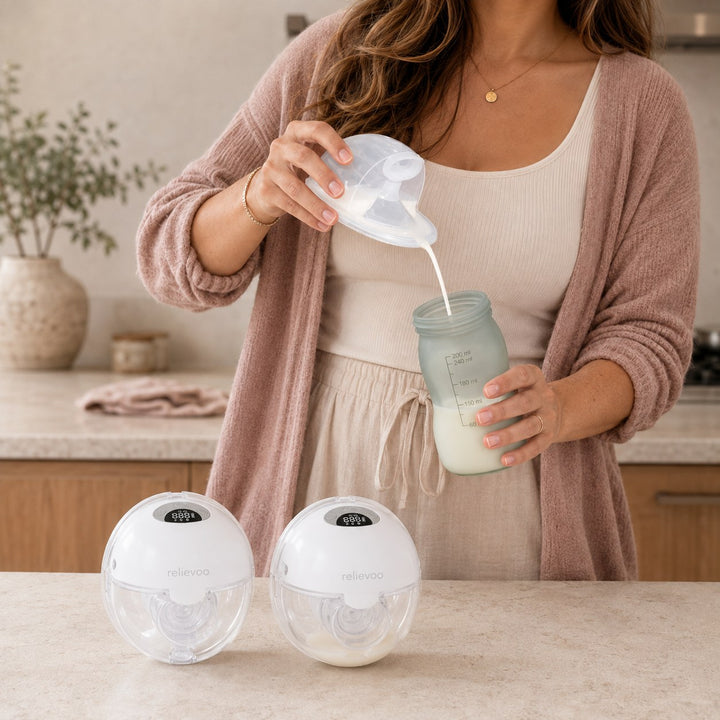
Wearable pumps sit discreetly inside your nursing bra. They are hands-free, with no tubes and no wires to a wall. This makes them a popular choice for mums who want to express while moving around, working, or caring for older children. Brands such as Elvie, Willow and Momcozy make wearable pumps, and Relievoo offers its own range of wearable options, including the Relievoo M22 PRO2.
Traditional electric pumps with tubing
Traditional electric pumps use a motor unit connected to breast shields by tubing. They are often used for regular, longer expressing sessions at home. Brands such as Medela, Philips Avent and Lansinoh make this type of pump. They tend to offer reliable suction, but they can be less portable and less discreet than wearable pumps.
Manual pumps
Manual pumps are operated by hand, with no motor or battery. They are lightweight, quiet and inexpensive, and can be useful for occasional expressing or for relieving engorgement. Brands such as Tommee Tippee and Lansinoh make manual pumps. They do require more effort, and they are not designed for frequent, full-time expressing.
| Feature | Details |
|---|---|
| Type | Wearable, in-bra, hands-free double electric breast pump (sold as a set of two cups) |
| Modes | 4 modes: Stimulation, Suction, Massage, Automatic |
| Levels | Up to 12 adjustable levels with intelligent suction and frequency adjustment |
| Controls | On-device LED display and touch buttons, no app, no Bluetooth |
| Materials | BPA-free, food-grade PP and soft medical silicone in the milk path |
| Charging | USB-rechargeable with a simple round charging base |
What to look for in a wireless breast pump
If you are leaning towards a wireless or cordless pump, there are a few things worth thinking about before you buy. These factors can make a real difference to your daily comfort and to how well the pump fits into your routine.
Comfort and fit
Comfort is the most important factor for many mums. A pump that sits comfortably in your bra and uses soft, gentle materials will feel much easier to wear for a full session. Look for pumps with soft silicone in the milk path and a design that fits your body without digging in. The M22 PRO2, for example, uses BPA-free, food-grade PP and soft medical silicone in the milk path, and its clear collector cup lets you see your milk as it flows.
Modes and suction levels
Different mums prefer different rhythms. Some pumps offer a single suction setting, while others offer multiple modes and adjustable levels. A pump with a stimulation mode to encourage let-down, a suction mode for fuller expression, and a massage mode for comfort can give you more control over each session. The M22 PRO2 offers four modes across up to twelve adjustable levels, with intelligent suction and frequency adjustment.
Noise level
If you plan to pump at work, on a call, or beside your baby's cot at night, noise matters. Many wireless pumps are designed to be quiet, but the level varies. A pump with a low-noise motor can help you express discreetly without disturbing those around you. The M22 PRO2 is described as ultra-quiet, tuned for calm night sessions.
Ease of cleaning and charging
Think about how easy the pump is to clean and charge. A pump with fewer parts is usually simpler to wash and reassemble. USB-rechargeable pumps are convenient for topping up between sessions, and a clear collector cup lets you see your milk as it flows. The M22 PRO2 charges via USB with a simple round base, and its on-device LED display shows mode, level and battery at a glance.
Comparing wireless, traditional and manual pumps
To help you see the differences at a glance, here is a comparison of the three main types of breast pumps. The Relievoo column shows the features of the M22 PRO2, while the other columns describe each type in general terms.
| Feature | Wearable in-bra pump (Relievoo M22 PRO2) | Traditional electric pump with tubing | Manual pump |
|---|---|---|---|
| Hands-free use | Yes, worn inside the bra with no tubes | No, requires tubing and a motor unit | No, requires one hand to operate |
| Portability | High, fits discreetly in a bra | Moderate, needs a flat surface and power source | High, lightweight and compact |
| Modes and levels | 4 modes, up to 12 adjustable levels | Usually multiple modes and levels | Single setting, controlled by hand |
| Noise level | Ultra-quiet, tuned for night sessions | Audible motor hum | Silent |
| Milk path materials | BPA-free, food-grade PP and soft medical silicone | Varies by brand | Varies by brand |
| Cleaning | Few parts, clear collector cup | Multiple parts including tubing | Few parts, simple to wash |
| Best for | Mums who want discretion and freedom to move | Regular sessions at home | Occasional expressing or relief |
How to choose the right wireless breast pump for you
When choosing a wireless breast pump, it helps to think about your daily routine and how expressing fits into it. There is no single right answer, but there are a few questions worth asking yourself.
Where will you be expressing?
If you plan to express at work, while travelling, or in shared spaces, a wearable in-bra pump is likely to suit you best. It allows you to move around and keeps the pump hidden under your clothing. If you will mostly express at home, a traditional electric pump with tubing may be perfectly adequate, and it can offer a very reliable session.
How often will you express?
For frequent, regular expressing, an electric pump, whether wearable or traditional, is usually the more practical choice. Manual pumps are fine for occasional use, but they can be tiring for full-time expressing. If you are returning to work and need to express during the day, a wireless pump can make the process much easier to fit around your schedule.
What feels comfortable for your body?
Comfort is deeply personal. Some mums find wearable pumps very comfortable, while others prefer the fit of a traditional pump with a separate shield. If you have larger breasts or elastic nipples, you may need to consider how well a pump fits your body. It is always worth reading the product details carefully and, if possible, speaking to other mums about their experiences.

Verdict: who should choose which type of pump
There is no single best wireless breast pump for everyone. The right choice depends on your circumstances, your comfort and your routine. Here is a clear summary of who each type of pump suits best.
- Choose a wearable in-bra pump if you want hands-free convenience, plan to express away from home, or value discretion above all. The Relievoo M22 PRO2 is a wearable option with four modes and up to twelve levels, designed to sit quietly inside your bra.
- Choose a traditional electric pump with tubing if you mostly express at home and prefer a separate motor unit with a stable, reliable suction. Brands such as Medela, Philips Avent and Lansinoh make this type of pump.
- Choose a manual pump if you only need to express occasionally, want something lightweight and quiet, or are looking for a simple backup option. Brands such as Tommee Tippee and Lansinoh make manual pumps.
Practical tips for expressing comfortably
Whatever type of pump you choose, there are a few simple things that can make expressing more comfortable and easier to fit into your day. These are general suggestions, and it is always worth following the current guidance from trusted sources.
Get comfortable before you start
Find a quiet, relaxed spot where you can sit comfortably. Having a drink nearby and taking a few slow breaths can help your body settle. Some mums find it helps to look at their baby or a photo, as this can encourage let-down naturally.
Start on a low suction level
It is usually best to begin on the lowest suction setting and gradually increase until you find a level that feels comfortable. Pumping should not hurt. If it does, lower the level or check that the breast shield is positioned correctly.
Follow current advice on storage and sterilising
For advice on storing expressed milk, sterilising pump parts, and how long a session should last, the NHS provides clear guidance. The NCT and La Leche League GB also offer practical support for expressing and breastfeeding. You can read more in the Relievoo guide to storing breast milk.
A calm conclusion
Finding the best wireless breast pump in the UK is about matching the pump to your life, not chasing a single perfect product. Wearable in-bra pumps offer freedom and discretion, traditional electric pumps offer reliable home sessions, and manual pumps offer simplicity for occasional use. Take your time, consider your routine, and choose what feels right for you. If you have questions about a specific pump, Relievoo customer service is happy to help. You can explore the full range of Relievoo breast pumps to see what is available.
Frequently asked questions
What is the best wireless breast pump?
There is no single best wireless breast pump for everyone. The right choice depends on how often you plan to express, where you will be, and what feels comfortable for your body. Wearable in-bra pumps suit mums who want hands-free convenience, while traditional electric pumps are often chosen for regular sessions at home.
How does a breast pump work?
A breast pump uses gentle suction to draw milk from the breast into a collection cup or bottle. Most electric pumps offer different modes, such as stimulation to encourage let-down and suction for fuller expression. Wearable pumps sit inside your bra and are operated with on-device controls, with no tubes or wires.
Is breast pumping painful?
Breast pumping should not be painful. If you feel discomfort, it may be that the suction level is too high or the breast shield does not fit well. Start on a low level and gradually increase to what feels comfortable. If pain continues, it is worth speaking to your midwife, health visitor or a breastfeeding specialist.
How long should a breast pump session last?
The length of a pumping session varies from mum to mum and depends on your baby's age and your own routine. It is best to follow the current advice from trusted sources such as the NHS or the NCT. Stop when your breasts feel comfortable and milk flow has slowed.
Why is my breast pump not working?
If a breast pump is not working, check that it is charged or plugged in, that all parts are correctly assembled, and that the collection cups are positioned properly. Make sure the tubing or milk path is not blocked. If the problem continues, contact the manufacturer's customer service for help.