A Step-by-Step Guide to Pumping at Work Laws in Texas
Short answer In Texas, the federal PUMP Act protects your right to pump at work. Employers must provide reasonable break time and a private, non-bathroom space to express milk. To make it work smoothly, notify your employer in advance, find your pumping spot, set a schedule, and store your milk safely.
Returning to work after having a baby brings a mix of emotions, and figuring out how pumping fits into your workday can feel like one more thing to manage. The good news is that in Texas, you have clear legal protections that make it possible to continue providing breast milk for your baby while you work. This guide walks through the process step by step, from knowing your rights to setting up a routine that feels manageable.

Understanding your rights under the PUMP Act
The main law protecting nursing mothers at work is the federal PUMP Act, which is part of the Fair Labor Standards Act. Under this law, employers are required to provide two basic things: reasonable break time to express milk and a private space that is not a bathroom. The space must be shielded from view and free from intrusion, so you can pump in privacy.
This protection applies for up to one year after your child's birth. While the law covers most employers, there is a narrow exemption for companies with fewer than 50 employees, but only if they can prove that providing these accommodations would cause significant difficulty or expense. In practice, many small businesses still choose to support their employees by offering a private space and break time.
It helps to know that you do not have to ask for permission to pump. You have a right to do it. However, giving your employer a heads-up before your return makes the transition smoother for everyone. For a clear overview of the federal rules, the U.S. Department of Labor's nursing mothers page is a helpful resource, and the CDC offers general guidance on breastfeeding and expressing milk.
| Feature | Details |
|---|---|
| Type | Wearable, in-bra, hands-free double electric breast pump |
| Modes | 4 modes: Stimulation, Suction, Massage, Automatic |
| Levels | Up to 12 adjustable levels with intelligent suction & frequency adjustment |
| Controls | On-device LED display + touch buttons, no app, no Bluetooth |
| Materials | BPA-free, food-grade PP and soft medical silicone in the milk path |
| Noise | Ultra-quiet motor, discreet for use on work calls |
Step-by-step guide to pumping at work
Once you understand your rights, the next step is putting a plan in place. Here is a practical sequence that many nursing mothers find useful.
- Notify your employer. Reach out to your manager or human resources department before your return to work. Let them know you plan to express milk and ask about the company's lactation policy. This conversation can also cover where you will pump and how breaks will fit into your schedule.
- Identify your pumping space. Ask to see the designated lactation room or another private area you can use. It should have a door you can lock, a chair, and a flat surface for your pump. If the space is not a bathroom, it likely meets the legal requirement. If your workplace does not have a dedicated room, discuss a temporary solution like a private office or conference room.
- Set a pumping schedule. Think about your baby's feeding times and your work commitments. Many mothers find it helpful to pump around the same times their baby would normally nurse. You can adjust the schedule as you learn what works for your body and your workload.
- Prepare your pump and supplies. Pack your breast pump, flanges, bottles or collection cups, and a cooler with ice packs. Having everything ready the night before makes the morning easier. If you use a wearable pump, you can slip it into your bra and move around more freely.
- Store your milk safely. Label each container with the date and place it in a shared refrigerator or your personal cooler. For the most current recommendations on storage times and temperatures, follow the CDC's guidelines on storing breast milk.
- Clean up and reset. After each session, rinse your pump parts or wipe them down according to the manufacturer's instructions. Keeping a small cleaning kit at your desk can help you stay on top of this without extra trips.
How long should a pumping session last?
There is no single answer that fits everyone. A typical session might last anywhere from 10 to 20 minutes, but the right length depends on your milk flow and your baby's needs. The goal is to feel comfortable and to empty your breasts enough to stay comfortable until the next session. If you are unsure what works for you, a lactation consultant can offer personalized advice.
Should pumping hurt?
Pumping should not be painful. If you feel discomfort, it is often a sign that something needs adjusting. The most common culprit is a flange that does not fit well. A flange that is too small or too large can cause friction and soreness. Another possibility is that the suction level is set too high. Most pumps have adjustable levels, so you can dial it back to a gentler setting. If pain continues, talk to your OB-GYN, a lactation consultant, or your healthcare provider for guidance.
Choosing a pump that fits your work life
Your pump is the tool you will use most during the workday, so it is worth choosing one that matches your routine. Traditional electric pumps are reliable and effective, but they tether you to a wall outlet. If your pumping space is a shared room or you need to move between meetings, a hands-free option can make a big difference.
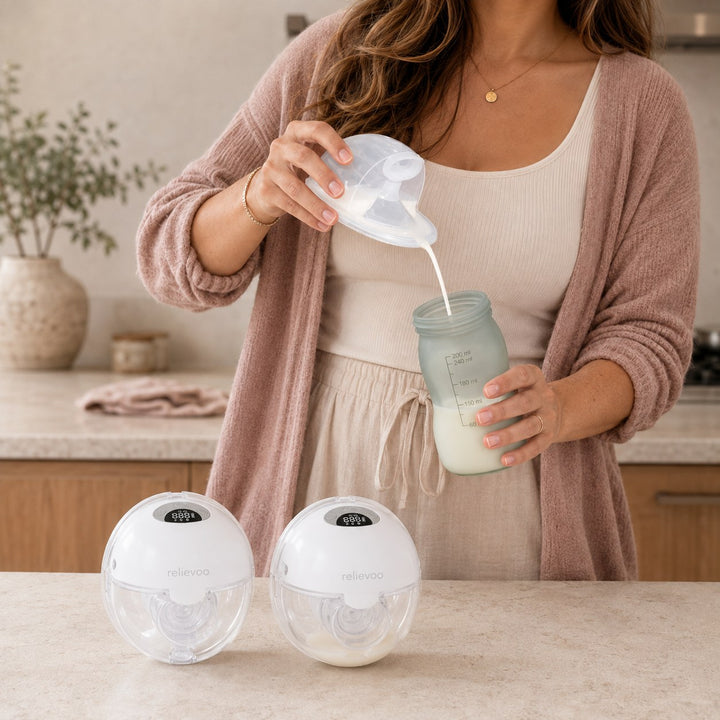
Relievoo offers a wearable breast pump, the M22 PRO2, which sits discreetly inside your bra. It has four modes, including a gentle massage mode, and up to twelve adjustable levels, so you can find a comfortable setting. The motor is ultra-quiet, which means you can wear it during a work call without drawing attention. There are no tubes or wires, and no app to pair, so it is simple to use.
If you are comparing different models, think about what matters most to you: portability, noise level, ease of cleaning, and how the pump fits your body. You can browse the full range of Relievoo breast pumps to see what is available. A wearable pump is one helpful option, but it is not the only path. Some mothers prefer a traditional pump for their main sessions and a wearable one for travel or busy days.
Common mistakes to avoid
Even with a good plan, small missteps can make the first weeks harder than they need to be. Here are a few pitfalls to watch for.
- Waiting too long to tell your employer. Giving your manager and HR plenty of notice helps them prepare a space and schedule. It also sets a clear expectation that pumping is part of your workday.
- Skipping sessions to catch up on work. Skipping pumps can lead to engorgement, discomfort, and a dip in your milk supply. Treat your pumping breaks as a priority, just like any other meeting.
- Using the wrong flange size. A poor fit can cause pain and reduce how much milk you express. Many pumps come with multiple flange sizes, and a lactation consultant can help you find the right one. Relievoo also has a flange sizing guide that explains how to measure.
- Not having a backup plan. If your usual pumping space is occupied or your pump battery dies, what will you do? Keeping a manual pump or extra batteries in your desk can save the day.
- Forgetting to label your milk. If you store milk in a shared refrigerator, clear labels with your name and the date prevent mix-ups and help you use the oldest milk first.

Building a sustainable pumping routine
The first few weeks back at work are often the hardest, but most mothers find that a rhythm develops. Give yourself permission to adjust your schedule as you learn what works. Some mothers pump first thing in the morning before the workday starts, others prefer to pump during lunch, and many do both.
It is also normal to wonder which pumping session to drop first as your baby gets older and starts eating solids. There is no universal answer. Many mothers find that they can gradually reduce the number of sessions as their baby's needs change. Pay attention to your comfort and your supply, and make changes slowly. If you have questions about your specific situation, a lactation consultant can help you plan.
Remember that you are not alone in this. The American College of Obstetricians and Gynecologists (ACOG), HealthyChildren.org, and the Office on Women's Health all offer practical information on breastfeeding and pumping. For peer support and local resources, La Leche League USA connects nursing mothers with trained volunteers who understand the challenges of pumping at work.
Your rights and responsibilities at a glance
Here is a quick summary of the key steps and what they involve.
| Step | What to do | Why it matters |
|---|---|---|
| Notify your employer | Tell HR or your manager before your return | Sets up your space and schedule in advance |
| Find a private space | Confirm a non-bathroom, lockable area | Meets the PUMP Act requirement and protects your privacy |
| Set a schedule | Plan pumping times around your workday | Keeps you comfortable and maintains your supply |
| Pack your supplies | Bring your pump, flanges, and cooler | Ensures you have everything you need |
| Store milk safely | Label and refrigerate or chill your milk | Keeps your milk safe for your baby |
| Clean your parts | Rinse or wipe pump parts after each use | Prevents contamination and keeps your pump working well |
A calm note on the transition
Going back to work while continuing to breastfeed is a significant adjustment, and it is okay to give yourself time to settle into it. Some days will feel easy, and others will feel like a lot. That is normal. You are doing something important for your baby, and you are allowed to ask for the support you need to make it work.
If you run into questions about your pump, Relievoo customer service is available to help. And if you are still deciding on a pump, the M22 PRO2 wearable pump is designed to make pumping at work more comfortable and discreet. Whatever you choose, the most important thing is finding a routine that feels sustainable for you and your baby.
For more detailed guidance on returning to work, the CDC and Office on Women's Health provide reliable, up-to-date information on breastfeeding and expressing milk. You have the knowledge, the legal protection, and the tools. Take it one day at a time.
Frequently asked questions
Does pumping at work count as a break?
Yes, under the PUMP Act, pumping is considered work time and you are entitled to reasonable break time to express milk. Your employer must compensate you for this time, just like any other break. The frequency and duration of breaks should meet your individual needs.
How often should I pump at work?
The right frequency depends on your baby's age and your own comfort. Many nursing mothers find that pumping every few hours works well, but the exact schedule is personal. For current guidance on expressing and storing milk, check the CDC's breastfeeding resources.
Can my employer deny me a private space to pump?
Under the PUMP Act, most employers must provide a private space that is not a bathroom. There is a narrow exemption for employers with fewer than 50 employees if they can prove undue hardship. If you believe your rights are not being met, talk to your HR department or a legal advisor.
How long can I store my expressed milk at work?
Storage times depend on the temperature and conditions. For the most accurate and current recommendations, follow the CDC's guidelines on storing breast milk. Generally, freshly expressed milk can be kept in a cooler with ice packs or a refrigerator, but always verify the details with the CDC.
Should pumping hurt?
No, pumping should not be painful. If you feel discomfort, it may be a sign that your flange size is not right or that the suction level is too high. Check your flange fit and adjust the settings. If pain continues, talk to a lactation consultant or your healthcare provider.