Exclusive Pumping: A Realistic Schedule for the First 3 Months
Exclusive pumping — feeding your baby breast milk entirely by bottle while pumping to maintain your supply — is a completely valid way to feed. Some moms choose it; others arrive here because of latch difficulties, a NICU stay or personal circumstances. Whatever brought you, the goal is the same: a schedule you can actually sustain. Here's how I coach exclusive pumpers through the first 12 weeks.
The golden rule: pump like a newborn feeds
In the early weeks, your body sets its long-term supply based on how often milk is removed. A newborn feeds 8-12 times a day, so exclusive pumpers should aim for a similar number of sessions — including at least one overnight session when prolactin levels are highest.
Weeks 1-4: establishing supply
- 8 sessions per day, roughly every 2.5-3 hours
- One session between midnight and 5 a.m.
- 15-20 minutes per session, or a few minutes past the last drops
Weeks 5-8: settling in
- Drop to 6-7 sessions if your supply is well established
- Keep the overnight session a little longer to protect supply
Weeks 9-12: finding sustainability
- Many moms move to 5-6 sessions and can drop the middle-of-the-night pump if supply holds
- Watch output for 3-4 days after any drop before reducing further
Make each session count
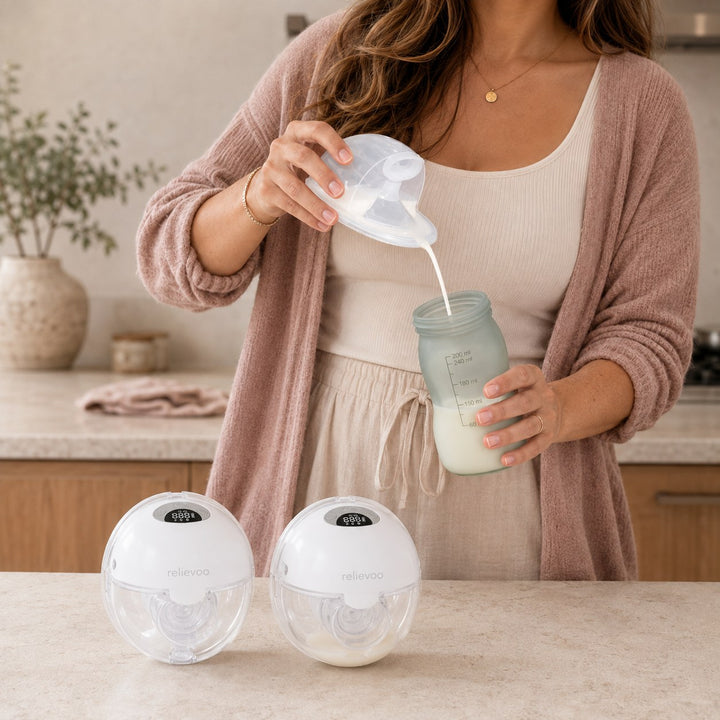
Being tethered to a wall outlet 6-8 times a day is exhausting. A cordless wearable pump lets you feed the baby, prep bottles or simply rest while you pump — which, realistically, is what keeps exclusive pumpers going.
Shop: TheRelievoo Wearable Breast Pump (Double) — pump while you parent — free USPS tracked shipping, 30-day money-back and a lifetime warranty.
Two things dramatically affect output: flange fit and relaxation. A flange that's too big or too small reduces milk removal and causes soreness. If your nipple rubs the sides or a lot of areola is pulled in, try a smaller size from a set of flange inserts.
Storing your milk safely
Follow the CDC storage guidelines: room temperature up to 4 hours, refrigerator up to 4 days, and freezer up to 6-12 months (use the oldest first). Label everything with the date. Reusable silicone storage bags lay flat in the freezer and cut down on single-use waste. When it's time to feed, a cordless bottle warmer brings milk to a gentle temperature in about two minutes without a stovetop or microwave.
Protecting your mental health
Exclusive pumping is a real commitment. Give yourself permission to combo-feed with formula if you need to — fed is the goal. Lean on La Leche League USA and, if output drops suddenly or you feel overwhelmed, loop in your OB-GYN or an IBCLC.
If you are comparing options, you can take a look at our wearable breast pump M22 PRO2 or browse all our breast pumps.
Frequently asked questions
How long should each pumping session be?
About 15-20 minutes, or a couple of minutes past your last let-down.
When can I stop the overnight pump?
Usually once supply is well established, often around 8-12 weeks — but drop it gradually and watch your output.
How much milk should I be getting?
It varies widely. Total daily output matters more than any single session, and consistency is what protects it.
Build the schedule around your life, not a stranger's spreadsheet, and it will be far easier to keep going.