CDC Breast Milk Storage Guidelines Spanish: A Step-by-Step Guide
Short answer This guide walks through the CDC's recommendations for storing breast milk safely, from choosing the right container to labeling and refrigeration. It covers room temperature, refrigerator, and freezer storage, plus common mistakes to avoid. The steps are simple and practical for everyday moms.
Storing breast milk safely is one of the most important parts of the pumping routine. Whether you are heading back to work, building a stash for a date night, or just want to be prepared, knowing how to handle and store expressed milk gives you one less thing to worry about. The Centers for Disease Control and Prevention (CDC) offers clear, practical guidance on this topic, and this step-by-step guide walks you through it. We will cover the essentials, common mistakes to avoid, and a few tools that can make the process easier, including a look at the Relievoo Reusable Silicone Breast Milk Storage Bags.

Why Following Storage Guidelines Matters
Breast milk is full of nutrients and antibodies that help protect your baby. But like any food, it needs to be handled with care to stay safe. Proper storage slows down the growth of bacteria and keeps the milk fresh for your little one. The CDC provides detailed recommendations on how to store breast milk safely, and following them helps ensure your baby gets the best from every bottle.
For moms who prefer to read in Spanish, the CDC also offers a Spanish-language version of its storage guidelines. This resource is designed to make the same clear, reliable information accessible to Spanish-speaking families. You can find these guidelines and other helpful materials on the CDC breastfeeding page.
It is also worth remembering that every baby is different. If you have questions about your specific situation, your baby's pediatrician or a lactation consultant can offer personalized advice. The American Academy of Pediatrics (HealthyChildren.org) and the American College of Obstetricians and Gynecologists (ACOG) are also excellent sources of general breastfeeding information.
| Feature | Details |
|---|---|
| Capacity | 180ml/6oz per bag |
| Material | 100% food-grade silicone, BPA, PVC & phthalate-free |
| Safety | Leak-proof double-seal zipper, freezer, fridge & microwave safe |
| Features | Easy-pour spout, measurement markings in ml & oz |
| Care | Dishwasher safe (top rack) |
| Eco-friendly | Replaces 1,000+ disposable bags |
Step-by-Step Guide to Storing Breast Milk
Here is a simple, practical process for storing your expressed milk. These steps follow the general principles recommended by the CDC and other health authorities.
- Start with clean hands and a clean pump. Wash your hands thoroughly with soap and water before you begin. Make sure your breast pump and all parts that will touch the milk are clean and dry. This is the first line of defense against contamination.
- Choose the right container. Use a clean, food-grade container made of glass or hard plastic. If you prefer bags, choose ones specifically designed for breast milk storage. They should be sturdy, leak-proof, and freezer-safe. The Relievoo Reusable Silicone Breast Milk Storage Bags are a great option. They are made from 100% food-grade silicone, are BPA, PVC, and phthalate-free, and each bag holds 180ml/6oz. They are also leak-proof with a double-seal zipper and safe for the freezer, fridge, and microwave.
- Label every container. Before you store the milk, write the date and time it was expressed on the container or bag. This helps you use the oldest milk first and avoid any guesswork later. If you are storing milk at daycare or with a caregiver, add your baby's name as well.
- Store milk in small amounts. It is often helpful to store milk in 2 to 4 ounce portions. This way, you only thaw what your baby needs for one feeding, which reduces waste. The 180ml/6oz capacity of the Relievoo storage bags makes them a practical size for this purpose.
- Place milk in the right spot. Store milk in the back of the refrigerator or freezer, not in the door. The temperature is most consistent there, which helps keep the milk safe. Avoid overfilling containers, as milk expands when it freezes.
- Use the oldest milk first. When you are ready to feed your baby, reach for the milk that has been stored the longest. This simple habit helps ensure nothing goes to waste.
Understanding Storage Times
The CDC provides general guidelines for how long breast milk can be safely stored at different temperatures. These are helpful benchmarks, but it is always best to check the CDC website for the most current recommendations. As a general rule, freshly expressed milk can be left at room temperature for a short period, kept in the refrigerator for a few days, and stored in the freezer for several months. For specific numbers and the latest advice, follow the guidance on the CDC's official page.
Thawing and Warming Breast Milk
When it is time to use your frozen milk, the safest way to thaw it is in the refrigerator, usually overnight. If you need it more quickly, you can hold the container under cool, then gradually warmer, running water. Never use a microwave to thaw or warm breast milk. Microwaves can create hot spots that might burn your baby's mouth and can also destroy some of the beneficial nutrients in the milk. Once thawed, gently swirl the milk to mix the layers; do not shake it vigorously.
Common Mistakes to Avoid
Even with the best intentions, small mistakes can happen. Here are a few common ones to watch out for, so you can keep your milk safe and fresh.
- Skipping the label. It is easy to think you will remember when you pumped, but a quick label with the date and time saves you from guessing later. It also helps caregivers know exactly what they are feeding your baby.
- Storing milk in the refrigerator or freezer door. The temperature in the door fluctuates every time you open it. The back of the unit is much more stable and keeps milk safer for longer.
- Adding warm milk to already cooled milk. This can raise the temperature of the entire container, which may encourage bacterial growth. Cool freshly expressed milk in the refrigerator first before combining it with other milk.
- Using a microwave to thaw or warm milk. As mentioned, this can create dangerous hot spots and damage the milk's nutrients. Stick to the refrigerator or warm water.
- Overfilling containers or bags. Milk expands when frozen. Leaving a little room at the top of the container or bag prevents leaks and cracks.
- Ignoring the smell test. If the milk looks, smells, or tastes off, it is best to discard it. Trust your senses. When in doubt, throw it out.
Tools That Make Pumping and Storage Easier
Having the right tools can make a big difference in your daily routine. A comfortable, efficient pump helps you express milk more easily, and good storage solutions keep that milk safe.
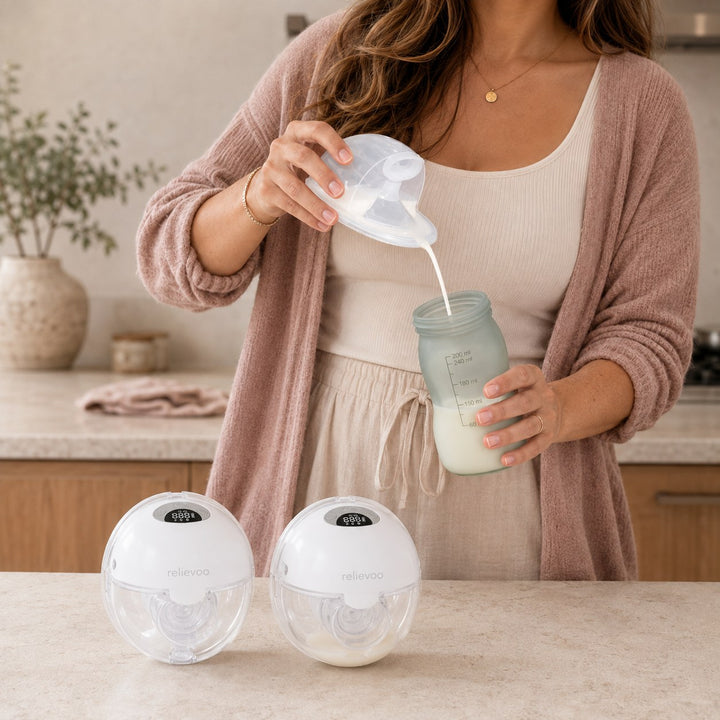
For pumping, the Relievoo M22 PRO2 Wearable Breast Pump is designed to be gentle and convenient. It is a hands-free, in-bra pump with no tubes or wires, so you can pump while moving around the house or even while working at your desk. It offers four modes across twelve soft levels, including a soothing massage mode, and an ultra-quiet motor. The pump sits discreetly inside your nursing bra, and a small LED display on each cup shows your mode, level, and battery. There is no app to download, just one-touch comfort. You can browse all of Relievoo's breast pumps to find the option that fits your lifestyle.
For storage, the Relievoo Reusable Silicone Breast Milk Storage Bags are a thoughtful alternative to single-use plastic bags. They are made from food-grade silicone, are leak-proof, and are designed to last for thousands of uses. Each bag holds 180ml/6oz and features an easy-pour spout for mess-free transfers, measurement markings in both ml and oz, and a double-seal zipper. They are also dishwasher safe on the top rack, which makes cleaning simple. Choosing a reusable option is a small way to reduce waste while keeping your milk safe.
If you are looking for a way to keep your pump and accessories organized, a protective carrying case can be a helpful addition. It is lightweight, has a custom-molded interior for a secure fit, and includes a zippered mesh pocket for accessories. It is a practical option for moms who pump on the go.
Finding the Right Flange Fit for Comfort
Comfort during pumping is important, and one of the most common causes of discomfort is a poor flange fit. The flange is the funnel-shaped piece that goes over your breast, and if it is not the right size, it can cause friction and pain. Many pumps come with a standard 24mm flange, but not every mom is a 24mm. Using the correct size can make a significant difference in your comfort and how efficiently you express milk.
Relievoo offers ALL-SIZE Flange Inserts that reduce the standard 24mm opening to sizes like 13mm, 15mm, 17mm, and 19mm. These soft silicone inserts are compatible with the Relievoo M22 PRO2 and most wearable pumps with a 24mm shield. They are BPA-free and help reduce nipple pain and tunnel friction. If you are unsure about your size, our guide on finding the right flange size offers helpful information. A comfortable fit can make your pumping sessions feel much more manageable.

Resources for Spanish-Speaking Moms
For moms who prefer to read in Spanish, the CDC provides a Spanish-language version of its breast milk storage guidelines. This resource covers the same important information about safe handling, storage times, and preparation. You can find it on the CDC breastfeeding page. Having this information in your preferred language helps ensure you have everything you need to store milk safely and confidently.
Other trusted organizations also offer Spanish-language resources. The Office on Women's Health and La Leche League USA both provide a wealth of breastfeeding information and support. These organizations are excellent places to turn to for general guidance and community support.
A Simple Summary of Safe Storage Steps
Here is a quick reference table to help you remember the key steps for safe breast milk storage.
| Step | What to Do | Why It Matters |
|---|---|---|
| 1. Prepare | Wash your hands and clean your pump parts. | Prevents contamination from the start. |
| 2. Choose a container | Use a clean, food-grade glass, hard plastic, or silicone bag. | Keeps milk safe and free from harmful chemicals. |
| 3. Label | Write the date and time on the container. | Helps you use the oldest milk first. |
| 4. Store in small portions | Store in 2 to 4 ounce amounts. | Reduces waste and makes thawing easier. |
| 5. Place in the back | Store in the back of the fridge or freezer. | Maintains a consistent, safe temperature. |
| 6. Use oldest first | Rotate your stash and use the oldest milk. | Ensures nothing goes to waste. |
Conclusion
Storing breast milk safely does not have to be complicated. By following the simple steps outlined in this guide, you can feel confident that your baby is getting safe, nutritious milk every time. Start with clean hands and equipment, choose the right container, label everything, and store milk in the right place. Avoid the common mistakes like using the microwave or storing milk in the door, and you will be well on your way.
Remember, the CDC is your go-to resource for the most current and detailed guidelines. For personalized advice, your pediatrician, OB-GYN, or a lactation consultant is always there to help. And when you are looking for tools to make the process easier, whether it is a comfortable wearable pump like the Relievoo M22 PRO2, reusable storage bags, or other breast pumps, Relievoo is here to support you. You are doing a wonderful job, and a little preparation goes a long way.
Frequently asked questions
How long can breast milk be stored in the refrigerator?
According to the CDC, freshly expressed breast milk can be kept in the back of the refrigerator for up to four days. For the most current and detailed guidance, check the CDC's breastfeeding page. Always label your milk with the date and time it was expressed.
Can I freeze breast milk?
Yes, breast milk freezes well. The CDC notes that frozen breast milk can be stored for up to six months in a standard freezer, and up to twelve months in a deep freezer. For the best quality, store milk in the back of the freezer where the temperature is most consistent.
What is the best way to thaw frozen breast milk?
The safest way to thaw frozen breast milk is to place it in the refrigerator overnight. You can also thaw it by holding the container under cool running water. Avoid using a microwave, as it can create hot spots that may burn your baby and destroy some of the milk's nutrients.
How do I know if my breast milk has gone bad?
Trust your senses. If the milk has a sour or off smell, a slimy texture, or an unusual color after being properly stored, it's best to discard it. When in doubt, throw it out to keep your baby safe.
Can I add freshly expressed milk to a container of already cooled milk?
It's best to cool freshly expressed milk in the refrigerator first before adding it to a container of already cooled milk. Adding warm milk to cold milk can raise the temperature of the entire container, which may encourage bacterial growth. Always follow the latest CDC guidance.