Best Wearable Breast Pump 2023: A Real Comparison
Short answer The best wearable breast pump for you depends on your routine and comfort. Wearable in-bra pumps offer hands-free convenience and discretion, traditional electric pumps provide a familiar setup with tubing, and manual pumps suit occasional use. Compare comfort, noise, portability, and ease of cleaning to find your match.
Searching for the best wearable breast pump often leads to endless threads, strong opinions, and very different experiences. The truth is that no single pump works for every mom. The right choice depends on your routine, your comfort, and how often you plan to pump.

This guide compares the three main types of breast pumps: wearable in-bra pumps, traditional electric pumps with tubing, and manual pumps. We will look at what each type does well, where it falls short, and who it suits best. By the end, you will have a clear picture to make your own decision.
Understanding the three main types of breast pumps
Before diving into specific products, it helps to understand the landscape. Each pump type serves a different purpose, and knowing the difference will save you time and frustration.
Wearable in-bra pumps
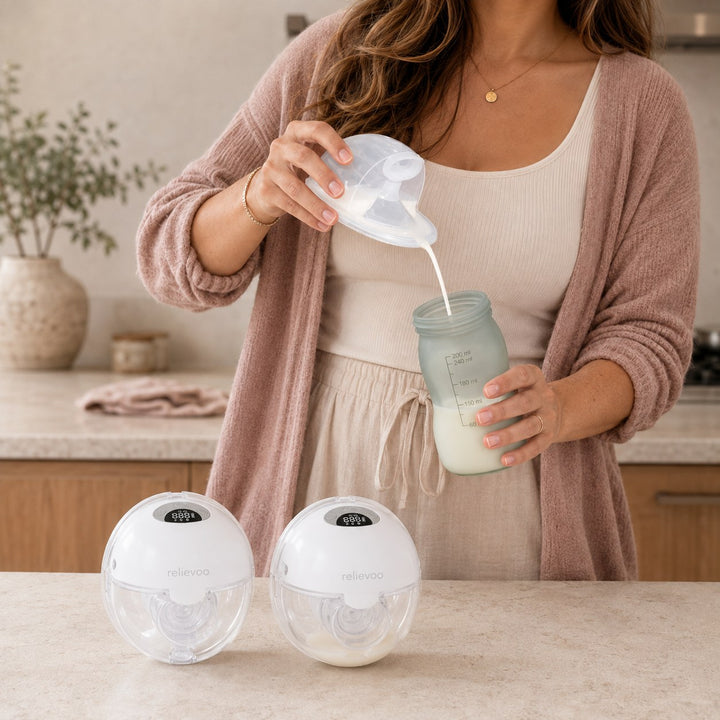
Wearable pumps, like the Relievoo M22 PRO2, sit entirely inside your nursing bra. There are no tubes, no cords, and no bottles hanging from your chest. The collection cups are built into the device, so you can move around, work, or care for your baby while pumping. Brands like Elvie and Willow also make wearable pumps, and Momcozy offers wearable options as well.
These pumps are discreet. You can wear them under a loose shirt and continue with your day. Most have rechargeable batteries and simple controls on the device itself. The trade-off is that they tend to be more expensive than manual pumps, and the collection capacity is smaller than a traditional pump bottle.
Traditional electric pumps with tubing
Traditional electric pumps, such as those made by Medela and Lansinoh, have been the standard for decades. They consist of a motor unit, tubing, and flanges that attach to bottles. You sit near the motor while pumping, which means you are tethered to a power source or a battery pack.
These pumps are reliable and widely available. Many hospitals use them, and they often come with a range of suction levels and cycle speeds. The main downside is the lack of mobility. You cannot walk around or do much while pumping, and the tubing can be cumbersome.
Manual pumps
Manual pumps are simple, handheld devices that work by squeezing a lever or bulb to create suction. Philips Avent and Tommee Tippee make manual pumps. They are lightweight, inexpensive, and require no electricity. You control the suction entirely with your hand.
Manual pumps are best for occasional use, such as relieving engorgement or pumping for a short trip away from your baby. They are not practical for exclusive pumping or for moms who pump multiple times a day, because they require effort and can tire your hand.
| Feature | Details |
|---|---|
| Type | Wearable, in-bra, hands-free double electric breast pump (sold as a set of two cups) |
| Modes | 4 — Stimulation, Suction, Massage, Automatic |
| Levels | Up to 12 adjustable levels with intelligent suction & frequency adjustment |
| Controls | On-device LED display + touch buttons (mode, +, −, power), no app, no Bluetooth |
| Materials | BPA-free, food-grade PP and soft medical silicone in the milk path |
How to compare breast pumps honestly
When you read threads about the best wearable breast pump, you will notice that moms value different things. Some prioritize silence, others need maximum portability, and many care most about comfort. Here are the criteria that matter most, and how each pump type measures up.
Comfort and fit
Comfort starts with the flange, the part that fits over your breast. A proper fit is essential for effective and pain-free pumping. The American Academy of Pediatrics and the CDC both offer guidance on breastfeeding basics, and a lactation consultant can help you find the right flange size. For a deeper look at sizing, the flange size guide on the Relievoo blog explains the basics.
Wearable pumps often use soft silicone shields that mold to your shape. Traditional pumps typically use rigid plastic flanges, which work well but may feel less forgiving. Manual pumps are the most basic, and comfort depends heavily on the design and your technique.
Noise level
Noise matters more than many moms expect, especially if you plan to pump at work, at night, or while your baby sleeps nearby. Wearable pumps have improved significantly in this area. The Relievoo M22 PRO2, for example, features an ultra-quiet motor designed for calm night sessions.
Traditional electric pumps make a rhythmic humming sound that can be noticeable. Manual pumps are silent, since you create the suction by hand. If discretion is a priority, a quiet wearable pump is the better choice.
Portability and convenience
This is where wearable pumps shine. They fit in your bra, so you can pump while making lunch, folding laundry, or taking a work call. There is nothing to carry beyond the pump itself. The Relievoo breast pump collection includes options designed for this kind of hands-free use.
Traditional pumps require you to sit near the motor. You can carry the motor in a bag, but you still need to manage the tubing. Manual pumps are portable but occupy your hand the entire time.
Ease of cleaning
Every pump needs regular cleaning to keep your milk safe. Wearable pumps have fewer parts than traditional pumps, which makes them quicker to rinse and sterilize. Traditional pumps have more components, including tubing that needs careful drying. Manual pumps are simple to clean but have small parts that can be easy to misplace.
For cleaning and storage guidance, follow the current advice from the CDC or the Office on Women's Health.
Battery and power
Wearable pumps run on rechargeable batteries, so you are not tied to a wall outlet. The Relievoo M22 PRO2 charges with a simple round USB base. Traditional pumps may need to be plugged in or use a separate battery pack. Manual pumps need no power at all, which makes them useful in an emergency.
Comparison table: wearable vs. traditional vs. manual
The table below summarizes the key differences between the three pump types. The Relievoo column reflects the features of the M22 PRO2 specifically.
| Criterion | Wearable (Relievoo M22 PRO2) | Traditional Electric | Manual |
|---|---|---|---|
| Hands-free use | Yes, sits fully in-bra | No, tethered to motor | No, requires one hand |
| Modes and levels | 4 modes, up to 12 levels | Multiple settings vary by brand | Suction controlled by hand |
| Noise | Ultra-quiet motor | Audible humming | Silent |
| Portability | Fits in bra, no extra parts | Motor, tubing, and bottles | Small and lightweight |
| Materials in milk path | BPA-free, food-grade PP, soft medical silicone | Varies by brand | Varies by brand |
| Controls | On-device LED display, no app | Buttons on motor unit | Manual lever |
| Best for | Moms who multitask and value discretion | Moms who prefer a traditional setup | Occasional or emergency use |
What moms actually ask about wearable pumps
Threads about wearable pumps tend to circle around a few practical questions. Here are honest answers to the most common ones.
Are wearable breast pumps worth it?
For many moms, yes. The ability to pump without being tied to a wall or holding a manual pump is a significant convenience. You can pump while caring for other children, working from home, or simply moving around. The trade-off is the price, which is higher than a manual pump. If you pump regularly and value your freedom, a wearable pump is likely worth the investment.
How long do wearable breast pumps last?
With proper care, a wearable pump should last through many months of daily use. The motor and battery are designed for repeated sessions, but parts like valves and membranes may need replacing over time. Follow the cleaning instructions in your manual, and store the pump in a dry place. If you have questions about a specific product, contact Relievoo customer service.
Is breast pumping supposed to hurt?
No, pumping should not hurt. Some tenderness in the early weeks is normal as your body adjusts, but sharp or persistent pain is a sign that something is off. The flange size may be wrong, or the suction may be too high. Start at a low suction level and increase gradually. If pain continues, talk to your OB-GYN, a lactation consultant, or your healthcare provider. The American College of Obstetricians and Gynecologists offers resources on breastfeeding basics.
Can you breast pump while laying down?
You can pump while reclining if the pump design allows it. Wearable pumps are the most flexible option because they sit inside your bra and have no tubes or hanging bottles. Make sure the collection cups stay upright to avoid spills. For other pump types, laying down may be awkward or cause leaks. Always follow the manufacturer's guidance for safe positioning.
How does a breast pump work?
A breast pump works by creating gentle suction that mimics a baby's sucking rhythm. This suction stimulates the release of milk from the breast. Most electric pumps have a stimulation phase to encourage let-down, followed by a suction phase for efficient milk expression. The La Leche League USA can provide additional information on how pumping fits into a breastfeeding routine.
What breast pump should I get?
Start by thinking about how often you will pump and where. If you plan to pump at work or while caring for other children, a wearable pump offers the most freedom. If you mostly pump at home and prefer a familiar setup, a traditional electric pump may feel more comfortable. For occasional use, a manual pump is a simple and affordable choice.
Why is a breast pump needed?
A breast pump allows you to express milk for your baby when you are not nursing directly. This can be helpful for returning to work, building a freezer stash, relieving engorgement, or allowing a partner to help with feedings. Pumping also helps maintain your milk supply when you are away from your baby.

Verdict: which pump type should you choose?
There is no universal best pump. The right choice depends on your lifestyle and how you plan to use it. Here is a clear breakdown of who each option suits.
- Choose a wearable in-bra pump if you want hands-free pumping, need to move around while expressing, or value discretion at work or in public. The Relievoo M22 PRO2 is a good example, with four modes, twelve levels, and an ultra-quiet motor.
- Choose a traditional electric pump if you prefer a familiar setup, plan to pump mostly at home, or want a wide range of suction settings. Brands like Medela and Lansinoh make traditional electric pumps.
- Choose a manual pump if you only pump occasionally, need a backup option, or want the most affordable and portable choice. Philips Avent and Tommee Tippee make manual pumps.
If you are leaning toward a wearable pump, take a close look at the Relievoo M22 PRO2. It offers a dedicated massage mode for comfort, an automatic mode that flows between stimulation and suction, and a clear LED display on each cup. It is designed for moms who want a gentler, more discreet pumping experience.
You can also browse the full Relievoo breast pump collection to see other options and compare features. For a step-by-step guide on using a wearable pump for the first time, the Relievoo blog has a helpful article.
Final thoughts
Finding the best wearable breast pump for your needs is a personal decision. Online threads can give you a sense of what other moms value, but only you know your daily routine, your comfort preferences, and how often you plan to pump.
Start by deciding which pump type fits your lifestyle, then compare specific models within that category. Pay attention to comfort, noise, portability, and ease of cleaning. If you have medical concerns or persistent discomfort, reach out to your healthcare provider or a lactation consultant for personalized advice.
Whatever you choose, remember that pumping is a skill that takes time to learn. Be patient with yourself, and give yourself permission to find what works best for you and your baby.
Frequently asked questions
Which wearable breast pump is best?
The best wearable breast pump depends on your priorities. If comfort and quiet operation matter most, look for a pump with multiple modes, soft silicone shields, and a low-noise motor. Compare features like suction levels, controls, and how discreetly the pump fits in your bra before deciding.
Are wearable breast pumps worth it?
Wearable breast pumps are worth it for moms who need hands-free pumping while caring for a baby, working, or moving around the house. They eliminate tubes and cords, making pumping more discreet and convenient. They may cost more than manual pumps, but the freedom they offer is a real benefit for many moms.
How long do wearable breast pumps last?
The lifespan of a wearable breast pump depends on how often you use it and how well you care for it. Most pumps are designed for daily use over many months. Follow the cleaning instructions in your manual and store the pump in a dry place to keep it working well.
Is breast pumping supposed to hurt?
No, pumping should not hurt. Some tenderness in the early weeks is normal as your body adjusts, but sharp or persistent pain is a sign that something is off. The flange size may be wrong, or the suction may be too high. Start at a low suction level and increase gradually.
Can you breast pump while laying down?
You can pump while reclining if the pump design allows it. Wearable pumps are the most flexible option because they sit inside your bra and have no tubes or hanging bottles. Make sure the collection cups stay upright to avoid spills. For other pump types, laying down may be awkward or cause leaks.