Elvie New Zealand: A Comprehensive Comparison with TheRelievoo
Short answer This guide compares Elvie breast pumps with TheRelievoo wearable pumps for New Zealand mums. It looks at the main types of pumps, how they work, and who each option suits best, so you can make an informed choice for your breastfeeding journey.
Choosing a breast pump is a personal decision, and with so many options on the market, it can feel overwhelming. This guide compares Elvie breast pumps with TheRelievoo wearable pumps, and looks at the main types of pumps available in New Zealand, so you can weigh up what matters most for you and your baby.

Understanding the main types of breast pumps
Before diving into a brand comparison, it helps to understand the three main types of breast pumps available to Kiwi mums. Each type has a different design and suits different lifestyles.
Wearable in-bra pumps
Wearable pumps sit discreetly inside your nursing bra, with no tubes and no cords. They are designed to be hands-free, so you can move around, work, or care for your baby while expressing. Brands like Elvie, Momcozy, Willow and TheRelievoo all make wearable pumps. These are a popular choice for mums who want discretion and flexibility.
Traditional electric pumps with tubing
Traditional electric pumps use a motor unit that sits on a table, connected to breast shields by tubing. Brands like Medela and Philips Avent are well known for this type. They are often reliable and familiar, but they tether you to a power source and a flat surface, which can be less convenient when you are on the go.
Manual pumps
Manual pumps are simple, hand-operated devices that work without electricity. They are quiet, lightweight and inexpensive, but they require effort and use one hand, which makes it harder to do anything else while expressing. Brands like Lansinoh and Tommee Tippee offer manual options. They suit mums who only pump occasionally.
| Feature | Details |
|---|---|
| Type | Wearable, in-bra, hands-free double electric breast pump (sold as a set of two cups) |
| Modes | 4 — Stimulation, Suction, Massage, Automatic |
| Levels | Up to 12 adjustable levels with intelligent suction & frequency adjustment |
| Controls | On-device LED display + touch buttons (mode, +, −, power), no app, no Bluetooth |
| Materials | BPA-free, food-grade PP and soft medical silicone in the milk path |
How breast pumps work
All breast pumps work on the same basic principle: gentle suction draws milk from your breast, mimicking the natural rhythm of a baby suckling. Most electric pumps have two phases. A stimulation phase uses a light, quick rhythm to encourage your let-down reflex. Once your milk starts to flow, a suction phase uses a deeper, slower rhythm to express milk more fully.
Wearable pumps do all of this inside your bra, with the motor and collection cup built into one discreet unit. TheRelievoo Serenity, for example, offers four modes: Stimulation, Suction, Massage and Automatic. The Automatic mode flows between stimulation and suction for you, across twelve gentle levels, so you do not need to adjust anything mid-session. There is no app to download and no phone to pair, as everything is controlled on the device itself.
Introducing the TheRelievoo Serenity wearable pump
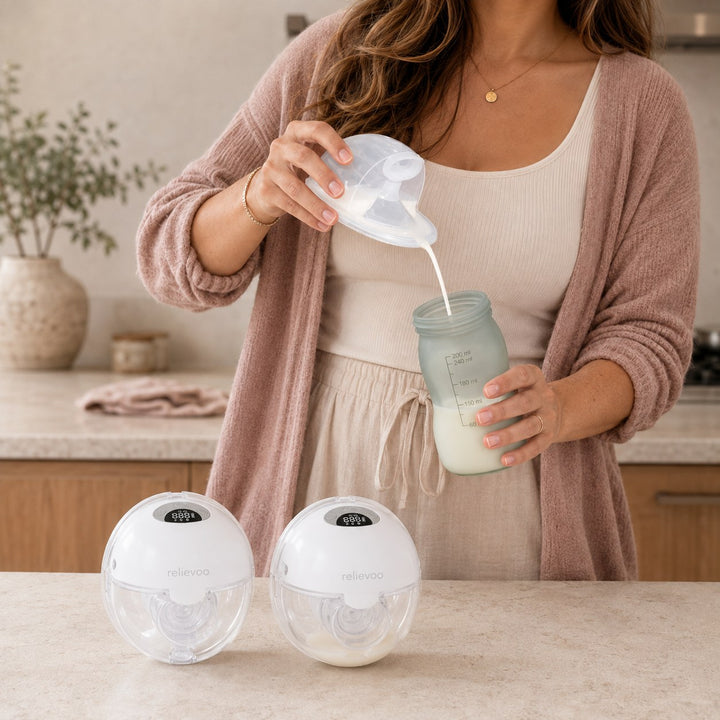
TheRelievoo Serenity is a hands-free, in-bra double pump designed around comfort. Each palm-sized clear cup sits discreetly inside your nursing bra, with no tubes, no dangling bottles and no cord to the wall. A one-touch LED display on each cup shows your mode, level and battery, so you can read everything at a glance.
The Serenity includes a dedicated Massage mode, which is designed to gently ease engorgement, lumps and the everyday tenderness of lactation. This is a feature that many wearable pumps do not offer. The motor is ultra-quiet, so you can express beside your baby's cot at 2am without startling them awake, or wear it on a work call without anyone knowing.
Every part that touches your milk is made from BPA-free, food-grade PP and soft medical silicone. The clear collector cup lets you see your milk as it flows, and the round USB charging base makes topping up simple. You can view the Relievoo M22 PRO2 product page for full details, or browse the complete breast pump collection.
Side-by-side comparison
To help you compare the main types of pumps at a glance, here is a table that outlines the key differences. The Relievoo column uses the product facts for the Serenity. The other columns describe the type of pump in general terms, without specific numbers, because specifications vary between brands and models.
| Criterion | TheRelievoo Serenity (wearable) | Other wearable pumps (e.g. Elvie, Momcozy, Willow) | Traditional electric pumps (e.g. Medela, Philips Avent) | Manual pumps (e.g. Lansinoh, Tommee Tippee) |
|---|---|---|---|---|
| Hands-free | Yes, worn in-bra with no tubes | Yes, worn in-bra | No, you are tethered to the motor unit | No, you need one hand to operate |
| Discretion | High, sits inside your bra | High, sits inside your bra | Low, visible with tubing and bottles | Low, requires manual pumping action |
| Modes and levels | 4 modes, up to 12 levels, including Massage | Varies by brand, typically multiple modes | Varies by brand, often multiple modes | No modes, suction controlled by hand |
| Noise level | Ultra-quiet motor | Generally quiet, varies by brand | Audible motor hum | Silent |
| App or phone needed | No, all controls on the device | Some brands require an app | Some brands offer app connectivity | No |
| Materials in milk path | BPA-free, food-grade PP and soft medical silicone | Varies by brand | Varies by brand | Varies by brand |
| Price | $230.90 (Double) | Varies by brand and model | Varies by brand and model | Generally the most affordable |
This table is a starting point. Your own priorities, such as how often you plan to pump and where, will guide your decision.
Elvie breast pumps in New Zealand
Elvie is a well-known brand that makes wearable breast pumps, including the Elvie Double Electric Breast Pump. Their pumps are recognised for their sleek design and ease of use. Elvie also offers other products, such as the Elvie Stride, a wearable pump designed for active mums, and accessories like the Elvie Catch, which catches leaking milk during feeds. These are separate products and are not breast pumps themselves.
Elvie pumps are available in New Zealand, and the brand has a customer support team that can be contacted through their website. Some mums find that Elvie's local presence in New Zealand is limited, which can make getting support a little harder. It is always worth checking the brand's website for current contact details and support options.
When comparing Elvie with TheRelievoo, it is important to look at the full picture, not just the brand name. Consider the features that matter to you, such as massage mode, noise level, whether you need an app, and the warranty on offer.

Questions Kiwi mums ask about breast pumps
Is a breast pump safe?
Yes, breast pumps are generally safe when used correctly. It is important to choose a pump made from safe materials, such as BPA-free food-grade plastic and medical silicone, and to clean it properly after each use. If you ever feel pain or discomfort, stop and check the flange fit and suction level. For more detailed guidance, talk to your LMC midwife or Plunket nurse.
Should breast pumping hurt?
Pumping should not hurt. If it does, the most common causes are a flange that is the wrong size or a suction level that is too high. Many pumps, including the Serenity, offer a massage mode to help with engorgement and tenderness. If pain continues, it is worth speaking with your LMC midwife, Plunket nurse or GP.
Can you breast pump while pregnant?
Expressing milk while pregnant is generally possible, but it is not something to do without talking to your LMC midwife or doctor first. The hormones of pregnancy and the stimulation from pumping can affect your body in different ways. It is always best to get personalised advice for your situation.
Can you breast pump lying down?
With a wearable in-bra pump, it is possible to express while lying down, as the cups sit inside your bra and collect milk without tubes. However, comfort and milk flow can vary depending on your position. It is worth trying a position that feels comfortable for you. For specific advice, talk to your LMC midwife or Plunket nurse.
How long should a breast pump session be?
There is no single right length for a pumping session, as it depends on your baby and your body. The key is to follow your own comfort and your baby's cues. For current guidance, check with Plunket or Health New Zealand Te Whatu Ora.
Support and resources for breastfeeding mums
Breastfeeding is a journey, and you do not have to figure it out alone. There are trusted organisations in New Zealand that offer support and information.
- Plunket offers breastfeeding support and advice from Plunket nurses.
- Health New Zealand Te Whatu Ora provides health information and resources for new parents.
- The Ministry of Health NZ publishes guidance on maternal and child health.
- Healthify He Puna Waiora offers reliable health information in plain language.
- La Leche League New Zealand provides peer support for breastfeeding mums.
For cleaning and caring for your pump, our guide on the best way to clean a breast pump has practical steps. If you are returning to work, our article on hands-free electric breast pumps may be helpful too.
Verdict: which pump should you choose?
There is no single "best" breast pump for everyone. The right choice depends on your lifestyle, how often you plan to pump, and what you value most. Here is a clear summary of who each option suits.
- Choose a wearable in-bra pump like TheRelievoo Serenity if you want to be hands-free, express discreetly at work or at home, and avoid being tethered to a wall. It is also a good choice if you value a quiet motor, a massage mode for comfort, and simple on-device controls with no app.
- Choose a wearable pump from another brand like Elvie, Momcozy or Willow if you prefer a particular brand's design, or if you are happy to use an app to control your pump. These pumps offer similar hands-free convenience, but features and pricing vary between models.
- Choose a traditional electric pump with tubing if you mostly pump at home and prefer the familiar design of a tabletop motor unit. Brands like Medela and Philips Avent are well established in this category, and some mums find the stronger suction reassuring.
- Choose a manual pump if you only pump occasionally, or if you want a lightweight, quiet backup option to keep in your bag. Brands like Lansinoh and Tommee Tippee make simple, affordable manual pumps.
Whichever type you choose, the most important thing is that it feels comfortable for you and fits your daily routine. Take your time, compare the features that matter most, and reach out to the support services above if you have questions. You can also contact Relievoo customer service if you would like to know more about the Serenity or any other pump in the range.
Frequently asked questions
How does a breast pump work?
A breast pump uses gentle suction to draw milk from your breast, mimicking the rhythm of a baby suckling. Most electric pumps offer a stimulation phase to encourage let-down, followed by a deeper suction phase for expression. Wearable pumps do this inside your bra, so you can move around freely.
What breast pump should I get?
Think about how often you will pump, where you will use it, and whether you need to be hands-free. Wearable in-bra pumps suit mums who want discretion and mobility. Traditional electric pumps with tubing are often a familiar choice for regular use at home. Manual pumps are handy for occasional use.
Can you breast pump laying down?
It is generally possible to express while lying down with a wearable in-bra pump, as the cups sit inside your bra and collect milk without tubes. However, comfort and milk flow can vary, so it is worth trying a position that feels comfortable for you. For specific advice, talk to your LMC midwife or Plunket nurse.
Should breast pumping hurt?
Pumping should not hurt. If you feel pain, the flange size or suction level may need adjusting. Many pumps, including TheRelievoo Serenity, offer a massage mode to help with engorgement and tenderness. If discomfort continues, speak with your LMC midwife, Plunket nurse or GP.
How long should a breast pump session be?
There is no single right length for a pumping session, as it depends on your baby and your body. A typical session might last around 15 to 20 minutes, but the key is to follow your own comfort and your baby's cues. For current guidance, check with Plunket or Health New Zealand Te Whatu Ora.