Best Wearable Breast Pump NZ: A Practical Buyer's Guide
Short answer The best wearable breast pump in New Zealand depends on your lifestyle, how often you pump and where you express. Wearable in-bra pumps offer hands-free convenience and discretion, traditional electric pumps suit mums who sit for sessions, and manual pumps work for occasional use. Compare the three types against your own routine to find the right fit.
Choosing a breast pump is a personal decision, and there is no single right answer for every mum. This guide sets out the main types of pumps available in New Zealand, explains how they differ, and helps you weigh up what matters most for your daily life. Whether you are returning to work, heading out for the day, or simply want a quieter way to express at home, the goal is to find a pump that feels comfortable and fits the way you live.

Understanding the main types of breast pumps
Before comparing specific models, it helps to understand the three main types of breast pumps you will come across in New Zealand. Each one works differently and suits different situations.
Wearable in-bra pumps
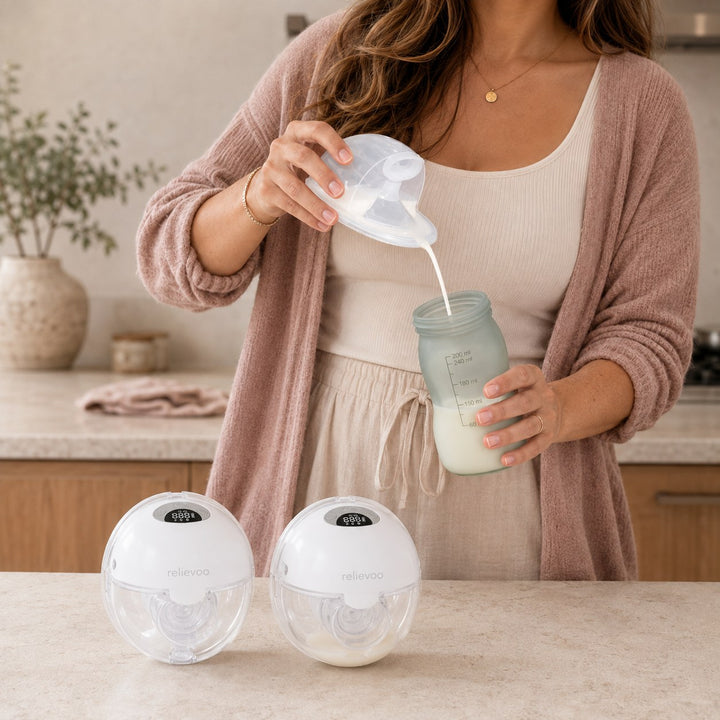
Wearable pumps sit discreetly inside your nursing bra, with no tubes and no cords. The motor and milk collection cup are all in one unit, so you can move around, care for your baby, or even work while expressing. They are designed to be quiet and portable, which makes them a popular choice for mums who want flexibility throughout the day. Brands like Elvie and Willow make wearable pumps, and the Relievoo M22 PRO2 is another option in this category.
Traditional electric pumps with tubing
Traditional electric pumps use a motor that sits on a table or hangs around your neck, connected to breast shields by tubing. They are a familiar choice for many mums and are made by brands such as Medela and Philips Avent. These pumps tend to have a straightforward design and are often used for regular pumping sessions at home or at work, where you can sit comfortably for the duration of the session.
Manual pumps
Manual pumps are operated by hand, using a handle to create suction. They are lightweight, quiet and inexpensive, and they can be handy for occasional use or for relieving engorgement when you are away from home. Brands like Lansinoh and Tommee Tippee make manual pumps. They do require more effort than electric pumps, so they are rarely the first choice for mums who pump often.
| Feature | Details |
|---|---|
| Type | Wearable, in-bra, hands-free double electric breast pump |
| Modes | 4 modes: Stimulation, Suction, Massage, Automatic |
| Levels | Up to 12 adjustable levels |
| Controls | On-device LED display and touch buttons, no app needed |
| Materials | BPA-free, food-grade PP and soft medical silicone in the milk path |
How breast pumps work
All breast pumps work on the same basic principle. They create gentle suction around the nipple and areola to draw milk out, mimicking the rhythm of a baby suckling. Most electric pumps offer two main phases: a stimulation phase with a light, quick rhythm to encourage let-down, and a suction phase with a deeper, slower rhythm to express milk more fully.
Wearable pumps work the same way, but they combine the motor and collection cup into a single unit that sits inside your bra. There are no tubes and no cords, and the controls are built into the device itself. Some pumps also offer a massage mode, which can help ease engorgement or discomfort before or during a session.
If you are new to pumping, it can help to read through a detailed guide on using a wearable electric breast pump before you start. Your LMC midwife or Plunket nurse can also offer guidance on positioning and technique.
Comparing your options: a side-by-side look
To make the comparison easier, here is a table that sets out the main differences between the three types of pumps. The Relievoo column reflects the M22 PRO2, while the other columns describe the type in general terms.
| Criterion | Wearable in-bra pump (Relievoo M22 PRO2) | Wearable in-bra pump (other brands) | Traditional electric pump | Manual pump |
|---|---|---|---|---|
| Hands-free use | Yes, worn inside the bra with no tubes | Yes, worn inside the bra | No, the motor sits beside you with tubing | No, you operate the handle by hand |
| Discretion | Designed to sit discreetly under clothing | Designed to sit discreetly under clothing | Motor and bottles are visible during pumping | Compact and easy to tuck in a bag |
| Modes and levels | 4 modes across up to 12 levels | Varies by model | Usually offers multiple modes and levels | Suction is controlled by your hand |
| Noise | Ultra-quiet motor, suitable for night pumping | Varies by model | Motor hum is audible during use | Very quiet, no motor |
| Portability | Palm-sized cups, USB-rechargeable | Portable, battery-powered | Requires a power source or battery pack | Lightweight and easy to carry |
| Ease of cleaning | Few parts, clear collector cup | Few parts, varies by model | Multiple parts including tubing and shields | Few parts, simple to clean |
| Best suited for | Mums who want to pump hands-free at home, at work or on the go | Mums who want a wearable option from another brand | Mums who prefer a traditional pump and sit for sessions | Occasional use or travel |
You can browse the full range of breast pumps at Relievoo to see what is available.
Key features to consider when choosing a pump
Once you have an idea of the type of pump you want, there are a few features worth thinking about. These will affect how comfortable and practical the pump feels in your daily routine.
Comfort and fit
Comfort is one of the most important factors. A pump should feel gentle against your skin, and the breast shield should fit well. Many pumps come with soft, flexible shields made from medical silicone. If you are unsure about sizing, a guide on flange sizing can help you understand what to look for. Pumping should not hurt, and if it does, it is worth checking the fit or talking to a lactation consultant.
Modes and suction levels
Different pumps offer different modes and levels of suction. A pump with multiple modes lets you start with a gentle stimulation rhythm and move to a deeper suction as your milk flows. Some pumps also include a massage mode to help with engorgement. Adjustable levels mean you can find the setting that feels right for you.
Noise level
If you plan to pump at work, in public, or beside your baby at night, noise matters. Wearable pumps are generally designed to be quiet, but the level varies between models. A quiet motor can make a big difference if you want to pump discreetly or without waking a sleeping baby.
Portability and battery life
Think about where you will pump. If you are often out and about, a portable pump with a rechargeable battery is a practical choice. Wearable pumps are designed to be worn under clothing, so they travel easily. If you mostly pump at home, a traditional electric pump may be perfectly adequate.
Cleaning and maintenance
Breast pumps need to be cleaned after every use, so the number of parts matters. Fewer parts usually means quicker cleaning. Wearable pumps tend to have fewer components than traditional pumps with tubing. For detailed advice, see this guide on cleaning your breast pump.
Are wearable breast pumps worth it?
This is one of the most common questions mums ask, and the answer depends on your circumstances. Wearable pumps cost more than manual pumps, and they are a newer option than traditional electric pumps. For many mums, the hands-free convenience is worth the investment, especially if they are returning to work or caring for a baby while pumping.
Wearable pumps are not necessarily better than traditional pumps, and they are not for everyone. Some mums prefer the familiar feel of a pump with tubing, while others find that a wearable pump fits their life better. The right choice is the one that you feel comfortable using regularly.
If you are comparing options, it can help to think about how often you will pump, where you will pump, and what matters most to you, whether that is discretion, portability or simplicity. For general information on expressing milk, Plunket and La Leche League New Zealand are good places to start.

Which breast pump should you choose?
There is no single best pump for every mum. The right choice depends on your lifestyle, your preferences and how you plan to use the pump. Here is a clear breakdown of who each option suits.
- Choose a wearable in-bra pump if you want to pump hands-free while caring for your baby, working or moving around the house. It is also a good choice if you value discretion and want to pump without being tethered to a wall. The Relievoo M22 PRO2 is one option in this category, with four modes and up to twelve levels of suction.
- Choose a traditional electric pump if you prefer a familiar design and are happy to sit for your pumping sessions. These pumps are widely available from brands like Medela and Philips Avent, and they can be a solid choice for regular pumping at home or at work.
- Choose a manual pump if you only need to pump occasionally, or if you want a lightweight, quiet option to keep in your bag for travel or emergencies. Manual pumps from brands like Lansinoh and Tommee Tippee are simple and easy to use.
If you are still deciding, it can help to think about your answers to a few simple questions. How often will you pump? Where will you be when you pump? Do you need to move around while pumping, or are you happy to sit still? How much do you value quiet operation? Answering these will point you toward the right type of pump.
Practical questions about pumping
Many mums have questions about the practical side of pumping, from how long a session should last to whether pumping should hurt. Here are some of the most common questions, answered in a straightforward way.
How long should a pumping session be?
A pumping session typically lasts as long as it takes for your milk to flow and for your breasts to feel comfortably drained. This varies from mum to mum and can change from session to session. For specific guidance on timing and frequency, follow the current advice from Health New Zealand Te Whatu Ora or talk to your LMC midwife or Plunket nurse.
Should pumping hurt?
Pumping should not hurt. A gentle pulling sensation is normal, but sharp pain or discomfort is a sign that something is not right. The suction level may be too high, or the breast shield may not fit properly. If pumping is painful, try lowering the suction level or checking the fit of the shield. If the pain continues, speak to your LMC midwife, Plunket nurse or a lactation consultant.
Can you pump while pregnant?
Pumping while pregnant is generally not recommended, because nipple stimulation can trigger contractions. If you are pregnant and considering pumping, it is important to talk to your LMC midwife or GP first. They can give you advice based on your individual situation.
Can you pump while lying down?
Wearable pumps are designed to be worn upright inside a nursing bra, so lying flat may cause milk to pool or spill. It is safer to pump while sitting upright or slightly reclined. If you have questions about positioning, your LMC midwife or a lactation consultant can help.
Why is a breast pump needed?
A breast pump can be useful for many reasons. It allows you to express milk so someone else can feed your baby, helps relieve engorgement, and makes it possible to maintain your milk supply while you are away from your baby. For mums returning to work or needing flexibility, a pump can be an essential tool.
Final thoughts
Finding the best wearable breast pump in New Zealand is about matching a pump to your own needs, not chasing a single "best" model. Take the time to think about how you will use the pump, what features matter most to you, and what feels comfortable against your skin. If you can, try a pump before committing, or choose one with a generous return policy so you can test it at home.
The Relievoo M22 PRO2 is a wearable, hands-free double pump with four modes and up to twelve levels of suction. It is designed to be quiet and discreet, with on-device controls and no app to set up. If you are still comparing options, you can browse the full range of breast pumps at Relievoo to see what is available.
Remember that support is available if you need it. Your LMC midwife, Plunket nurse, GP or a lactation consultant can offer personalised advice on pumping and breastfeeding. For general information, Plunket, Health New Zealand Te Whatu Ora and La Leche League New Zealand are reliable places to start.
Frequently asked questions
Which wearable breast pump is best?
There is no single best wearable pump for every mum. The right choice depends on how often you pump, where you express and what features matter to you. Compare the modes, suction levels, noise and fit of each model, and consider a pump with a return policy so you can test it at home.
Are wearable breast pumps worth it?
Wearable pumps are worth it for mums who want to pump hands-free while caring for a baby, working or moving around. They cost more than manual pumps and are a newer option than traditional electric pumps, so it helps to weigh the convenience against your budget and how often you will use it.
Do wearable breast pumps work?
Yes, wearable pumps work on the same suction principle as other electric pumps. They combine the motor and collection cup in a single unit that sits inside your bra. They are not necessarily more effective than traditional pumps, but they offer the convenience of being hands-free and portable.
What is a wearable breast pump?
A wearable breast pump is a hands-free electric pump that sits discreetly inside your nursing bra. The motor and milk collection cup are combined in one unit, with no tubes or cords. You can move around, care for your baby or work while expressing.
Should breast pumping hurt?
Pumping should not hurt. A gentle pulling sensation is normal, but sharp pain or discomfort usually means the suction is too high or the breast shield does not fit well. Try lowering the suction level or checking the fit, and talk to your LMC midwife, Plunket nurse or a lactation consultant if the pain continues.