Best Double Breast Pump NZ: A Comprehensive Buyer's Guide
Short answer A double breast pump lets you express from both breasts at once, saving time during each session. The right choice depends on your routine: wearable in-bra pumps suit mums who want hands-free, discreet pumping anywhere; traditional electric pumps offer a familiar setup with tubing; manual pumps work for occasional use. Compare comfort, noise, suction and portability to find your match.
Choosing a double breast pump in New Zealand can feel like a big decision, especially with so many styles and brands on the market. The right pump for you depends on how often you plan to express, where you will use it, and what comfort means to you. This guide compares the main types of double pumps, walks through the features that matter most, and gives a clear verdict on who each option suits best.

What Is a Double Breast Pump?
A double breast pump is a pump that lets you express milk from both breasts at the same time. Instead of pumping one side and then the other, both cups or shields work together, which can cut your expressing time in half. For mums who express regularly, especially those returning to work, that time saving can make a real difference to the day.
Double pumps come in a few different styles. Wearable in-bra pumps sit inside your nursing bra with no tubes or bottles hanging down. Traditional electric pumps have a motor unit that connects to breast shields via tubing. Manual pumps are hand-operated and usually used for occasional expressing. Each type has its own strengths, and the best choice depends on your lifestyle.
| Feature | Details |
|---|---|
| Type | Wearable, in-bra, hands-free double electric breast pump (sold as a set of two cups) |
| Modes | 4 modes: Stimulation, Suction, Massage and Automatic |
| Levels | Up to 12 adjustable levels with intelligent suction and frequency adjustment |
| Controls | On-device LED display and touch buttons, no app and no Bluetooth |
| Materials | BPA-free, food-grade PP and soft medical silicone in the milk path |
Key Features to Compare
Before looking at specific pumps, it helps to know what to compare. These are the features that tend to matter most to mums in New Zealand:
- Comfort: Look for soft, flexible cups and a pump that lets you adjust the suction to a level that feels gentle. A good fit is essential, so check the flange size guide if you are unsure.
- Noise: If you plan to pump at work, at night, or while bub is sleeping nearby, a quiet motor is worth prioritising.
- Suction and modes: Different modes for stimulation, suction and massage can make sessions more comfortable and efficient. Adjustable levels help you find what works for your body.
- Portability: Wearable pumps are the most portable option, as they fit entirely inside your bra. Traditional pumps need a flat surface and a power source.
- Cleaning: Fewer parts and clear cups make cleaning simpler. Check our guide on how to clean a breast pump for step-by-step advice.
How Does a Breast Pump Work?
A breast pump works by creating a gentle vacuum around your nipple to draw milk out. Most electric pumps start with a light, quick stimulation pattern to encourage your let-down, then switch to a deeper, slower suction rhythm to express milk. Wearable pumps do the same thing, but the motor and collection cup sit together inside your bra, so there are no tubes to manage.
Why Is a Breast Pump Needed?
A breast pump is useful for many reasons. It allows you to express milk for times when you are away from your baby, such as returning to work or going out for a few hours. It can also help relieve engorgement or a full feeling when your milk comes in. Some mums pump to build a small stash for flexibility, while others express occasionally for comfort. Plunket and La Leche League New Zealand offer practical guidance on expressing and storing breast milk.
Comparing the Main Types of Double Pumps
To make the decision easier, here is a side-by-side comparison of the three main types of double breast pumps. The Relievoo column reflects the M22 PRO2 wearable pump, while the other columns describe each type in general terms.
| Feature | Wearable in-bra (Relievoo M22 PRO2) | Traditional electric | Manual |
|---|---|---|---|
| How it fits | Sits discreetly inside your nursing bra | Motor unit sits on a table, connected by tubing | Hand-held, operated by squeezing a lever |
| Hands-free use | Yes, no tubes or wires | No, you need to hold the shields in place | No, both hands are needed |
| Modes and levels | 4 modes (Stimulation, Suction, Massage, Automatic) across 12 levels | Usually a few modes with adjustable suction | Suction depends on how firmly you squeeze |
| Noise level | Ultra-quiet motor, discreet in public | Audible motor hum | Quiet, but requires effort |
| Portability | Fully portable, no power point needed | Needs a flat surface and power source | Very portable, but tiring for full sessions |
| Best for | Mums who want to pump anywhere, hands-free | Mums who prefer a traditional setup at home | Occasional use or emergency relief |
Wearable Double Breast Pumps
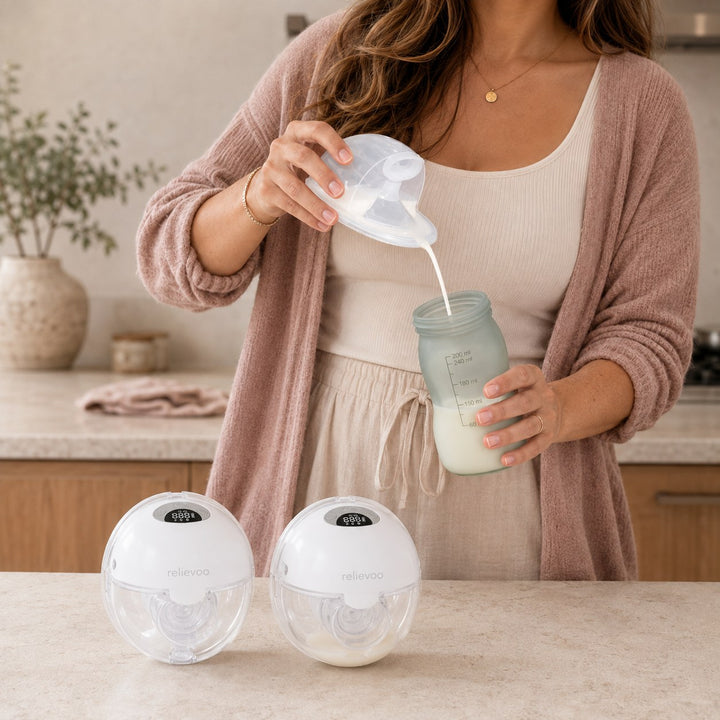
Wearable pumps like the Relievoo M22 PRO2 have become a popular choice for mums who want to express without being tied to a wall socket. The pump sits inside your bra, so there are no tubes, no dangling bottles and no need to undress completely. That makes it practical for pumping at work, in the car (as a passenger), or while moving around the house.
The M22 PRO2 offers four modes: Stimulation to encourage let-down, Suction for deeper expression, Massage to ease engorgement and discomfort, and Automatic, which flows between stimulation and suction for you. It has up to 12 adjustable levels, so you can find a gentle setting that feels right. The motor is ultra-quiet, which matters if you are pumping beside a sleeping baby or on a work call. Everything is controlled on the device itself, with no app or Bluetooth to pair.
The milk path is made from BPA-free, food-grade PP and soft medical silicone, and the clear cups let you see your milk as it flows. It is USB-rechargeable with a round charging base. For mums who want a hands-free option, wearable pumps are worth serious consideration. You can browse the full range of breast pumps at Relievoo to see what is available.
Can You Breast Pump Lying Down?
It is generally easier and safer to express sitting upright. A wearable pump relies on a good seal inside your bra, and lying flat can affect the position of the cups, which may reduce comfort or output. If you want to pump in bed, sitting propped up against pillows is a more practical option.
Traditional Electric Double Breast Pumps
Traditional electric pumps, such as those made by Medela, Spectra and Philips Avent, have been a staple for many years. They work with a motor unit that sits on a table, connected to breast shields by tubing. These pumps are known for being reliable and are often used by mums who express regularly at home.
The main trade-off is portability. You need a flat surface and a power source, and the tubing can be a little fiddly to manage. That said, many mums find the familiar setup reassuring, and the suction patterns are well established. If you mostly pump at home and do not mind sitting still for a session, a traditional electric pump can be a solid choice.

Manual Double Breast Pumps
Manual pumps are hand-operated and generally used for occasional expressing. Brands like Lansinoh and Tommee Tippee make manual options that are small, lightweight and easy to pack. They are useful for relieving engorgement or expressing a small amount when you are out and about.
The downside is that manual pumping requires effort, and it can be tiring for a full session. They are not the best choice if you plan to express regularly or build a stash. But for the occasional feed or a quick top-up, a manual pump can be a practical backup to have on hand.
Verdict: Which Double Breast Pump Should You Choose?
There is no single best pump for every mum. The right choice depends on your routine, your plans and what feels comfortable for your body. Here is a clear guide to who each option suits:
- Choose a wearable in-bra pump if you want to pump hands-free, need to express at work or while travelling, and value discretion. The Relievoo M22 PRO2 is a strong option here, with its quiet motor, massage mode and simple on-device controls.
- Choose a traditional electric pump if you mostly pump at home, prefer a familiar setup with tubing, and do not mind sitting still for a session. Brands like Medela and Spectra are well known in this space.
- Choose a manual pump if you only express occasionally, want a lightweight backup, or need quick relief when out and about. Lansinoh and Tommee Tippee make simple manual options.
Practical Tips for Double Pumping
Whatever pump you choose, a few simple habits can make expressing easier. Start each session on a low suction level and increase gradually until it feels comfortable. Pumping should not hurt, so if you feel sharp pain, check that the cup fits well and consider reading our flange size guide for fitting advice.
For cleaning, follow the current advice from Plunket or Health New Zealand Te Whatu Ora on sterilising and storing expressed milk. Our guide on cleaning your breast pump also walks through the steps. If you have any concerns about expressing, your LMC midwife, Plunket nurse or GP can offer personalised advice.
Final Thoughts
Choosing a double breast pump in NZ is about matching the pump to your life. Wearable pumps offer freedom and discretion, traditional electric pumps offer a familiar home setup, and manual pumps are handy for occasional use. Take your time, compare the features that matter to you, and remember that comfort is the most important thing of all.
If you would like to explore a hands-free option, take a look at the Relievoo M22 PRO2 or browse the full breast pump collection. For more reading, our guide on using a wearable electric breast pump covers the basics in more detail.
Frequently asked questions
Is a double breast pump better than a single?
A double pump lets you express both breasts at the same time, which can cut each session in half. That makes it a good fit if you express regularly or are returning to work. If you only pump occasionally, a single pump may be enough. It comes down to your routine and how much time you want to save.
What breast pump should I get?
Think about where you will pump most often. A wearable in-bra pump suits mums who want to move around or pump discreetly at work. A traditional electric pump with tubing is a familiar option for home use. A manual pump can work for occasional relief. Consider comfort, noise, suction and portability before deciding.
Can you breast pump lying down?
It is generally easier and safer to express sitting upright, as a wearable pump relies on a good seal inside your bra. Lying flat can affect the position of the cups and may reduce comfort or output. If you want to pump in bed, sitting propped up against pillows is a more practical option.
Should breast pumping hurt?
Pumping should not hurt. A little initial sensation is common, but sharp or ongoing pain usually means the flange size or suction level is not right for you. Check that the cup fits well and start on a lower suction level. If discomfort continues, talk to your LMC midwife, Plunket nurse or GP.