Breast Pump NZ: A Complete Buyer's Guide for Mums
Short answer A breast pump is a device that expresses milk from your breasts, giving you flexibility to feed your baby expressed milk from a bottle. The right pump for you depends on how often you plan to express, where you will use it and what feels comfortable on your body. Consider noise, fit, portability and how easy it is to clean before you choose.
Choosing a breast pump in New Zealand can feel like a big decision. There are many types, brands and features to consider, and every mum's situation is a little different. This guide is here to help you work out what actually matters when you are comparing breast pumps, so you can make a choice that suits your body, your routine and your peace of mind.

Why use a breast pump?
A breast pump expresses milk from your breast so you can store it and feed your baby from a bottle later. Many mums use a pump for different reasons: returning to work, sharing night feeds with a partner, relieving engorgement, or simply having a little flexibility in the day. Expressing can also help maintain your milk supply if you are away from your baby for a stretch of time.
If you are new to expressing, it helps to know that every mum's experience is different. Some find it easy from the start, while others take a while to get used to the sensation. It is completely normal to need a bit of practice. For general guidance on breastfeeding and expressing, Plunket and Health New Zealand Te Whatu Ora have helpful information for new parents.
| Feature | Details |
|---|---|
| Type | Wearable, in-bra, hands-free double electric breast pump (sold as a set of two cups) |
| Modes | 4 — Stimulation, Suction, Massage, Automatic |
| Levels | Up to 12 adjustable levels with intelligent suction & frequency adjustment |
| Controls | On-device LED display + touch buttons (mode, +, −, power), no app, no Bluetooth |
| Materials | BPA-free, food-grade PP and soft medical silicone in the milk path |
| Design | Clear collector cup, white motor dome, round USB charging base |
What to look for in a breast pump
When you start comparing breast pumps in NZ, you will notice a few key differences between models. These are the things that tend to matter most to mums day to day.
Comfort and fit
Comfort is the most important factor. A pump should feel gentle, not painful. The flange (the part that goes over your breast) needs to fit properly. If it is too small or too large, pumping can be uncomfortable and less effective. Many pumps come with a standard flange size, but some offer different sizes or inserts. If you are unsure about your size, our guides on Medela pump flange sizing and Spectra flange sizing walk you through how to measure and what to look for.
Noise level
How quiet a pump is can matter more than you might expect. If you plan to pump at work, on the phone, or beside your baby while they sleep, a quieter motor makes life easier. Wearable pumps are often designed to be discreet, so you can express without drawing attention.
Portability and how it is worn
Think about where you will actually use your pump. If you mostly express at home, a traditional electric pump with tubes and a wall plug may be fine. If you want to move around, work, or look after older children while pumping, a hands-free wearable pump that sits inside your bra is worth considering. There are no tubes or wires to the wall, so you can go about your day while expressing.
Cleaning and maintenance
Every part of the pump that touches your milk needs to be cleaned after each use. Pumps with fewer parts are quicker to wash and dry. Some wearable pumps have simple designs with just a few pieces, which makes the routine easier. For a full guide on keeping your pump clean, see our step-by-step article on the best way to clean a breast pump.
Controls and ease of use
Some pumps have physical buttons and a display on the device, while others connect to a phone app. Think about what feels simpler for you. A pump with on-device controls means you do not need to keep your phone nearby or remember to pair it. One-touch controls and a clear display can make middle-of-the-night pumping much easier.
Support and after-sales care
When something goes wrong with a pump, good support matters. Look for a brand that offers a warranty and a reasonable return policy. If you have questions about a product, Relievoo customer service can help you with sizing, usage and any issues that come up.
Types of breast pumps explained
There are a few main types of breast pumps, and each suits a different lifestyle.
Manual breast pumps
A manual pump is operated by hand, so you control the suction yourself. They are small, quiet and inexpensive, and they work well for occasional expressing. The downside is that they take more effort, and your hand can get tired during longer sessions.
Electric breast pumps
Electric pumps do the work for you. They offer consistent suction and usually have adjustable levels so you can find what feels comfortable. Traditional electric pumps have tubes that connect to a motor, which you place beside you. They are reliable and effective, but they tether you to one spot.
Wearable and hands-free breast pumps
Wearable pumps are a newer style. They sit inside your nursing bra, with no tubes or wires, and the collection cup is built into the device. You can move around, work or relax while expressing. They are discreet, quiet and designed for everyday life. If you are curious about how they work, our guide to using a wearable electric breast pump covers the basics.
Comparing breast pumps: what to check
When you are comparing models side by side, it helps to have a clear list of criteria. The table below summarises the main things to consider and why they matter.
| Criterion | Why it matters | What to check |
|---|---|---|
| Comfort | Pumping should feel gentle, not painful | Soft silicone flange, massage mode, adjustable suction levels |
| Fit | A proper flange fit improves comfort and efficiency | Flange size options, inserts, how the cup sits in your bra |
| Noise | A quiet pump is discreet at work and won't wake a sleeping baby | Motor noise level, reviews from other mums |
| Portability | How easy it is to use away from home | Weight, battery life, whether it needs a wall plug |
| Cleaning | Parts that touch milk need washing after every use | Number of parts, whether they are dishwasher safe |
| Controls | Simple controls make pumping easier, especially at night | On-device buttons, display, whether an app is required |
| Support | Good after-sales care gives you peace of mind | Warranty, return policy, customer service availability |
A closer look at the Relievoo M22 PRO2
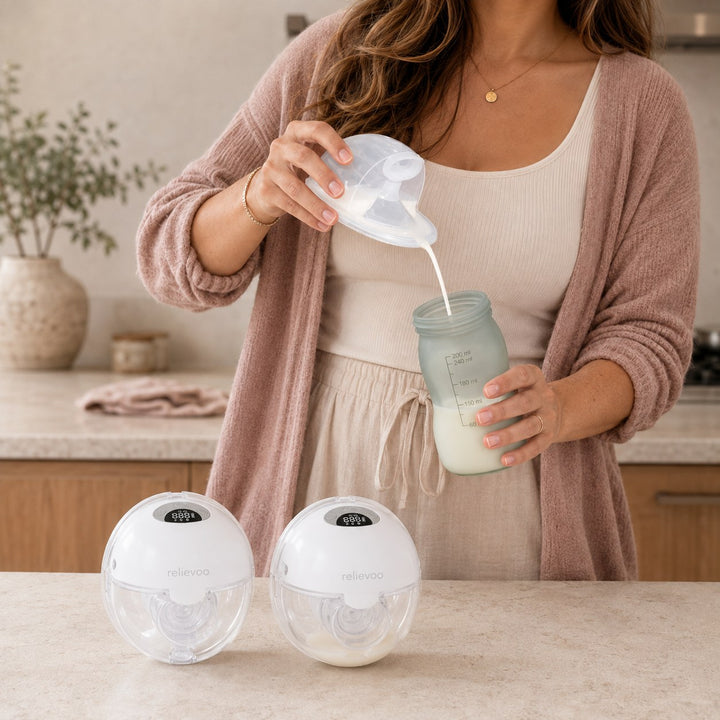
If you are considering a wearable pump, the Relievoo M22 PRO2 wearable breast pump is designed with comfort as the priority. It is a hands-free, in-bra double pump that sits discreetly inside your nursing bra, with no tubes and no wires to the wall. There is no app to download, so everything is controlled with one-touch buttons on the device itself.
It offers four modes across twelve gentle levels: Stimulation to encourage your let-down, Suction for a deeper rhythm, Massage to ease engorgement and tenderness, and Automatic which flows between stimulation and suction for you. The ultra-quiet motor is soft enough to wear on a work call or beside your baby's cot at night.
The parts that touch your milk are made from BPA-free, food-grade PP and soft medical silicone. The clear collector cup lets you see your milk as it flows, and the round USB charging base makes topping up simple. You can browse the full range of breast pumps on the Relievoo website to compare your options.

Common questions about breast pumps
How does a breast pump work?
A breast pump uses gentle suction to draw milk from your breast into a collection cup or bottle. Most electric pumps have a stimulation phase that mimics a baby's quick sucking to encourage your let-down, followed by a slower, deeper suction rhythm for expressing. Wearable pumps do this inside your bra, so you can move around while pumping.
Should breast pumping hurt?
No, pumping should not hurt. If you feel pain, the suction may be set too high, or the flange may not fit properly. Start on the lowest level and increase gradually until you feel a gentle pull. If discomfort continues, talk to your LMC midwife, Plunket nurse or GP for advice.
How long does expressed breast milk last?
Storage times depend on the temperature and the container you use. Follow the current advice from Plunket or Health New Zealand Te Whatu Ora for safe storage and handling. Always label your expressed milk with the date and time.
Can you breast pump while pregnant?
Expressing milk during pregnancy is generally not recommended for most women, as nipple stimulation can sometimes trigger contractions. If you are thinking about pumping while pregnant, talk to your LMC midwife or GP first. They can give you personalised advice.
Is a powerful breast pump better?
Not necessarily. Higher suction does not always mean better results. What matters more is finding a pump with adjustable levels so you can choose what feels comfortable and effective for your body. A pump that is gentle but consistent is often more useful than one with very strong suction that you avoid using.
Your breast pump checklist
Before you make a decision, run through this simple checklist to make sure you have covered the essentials.
- Does the pump feel comfortable against your breast, with a flange that fits?
- Is it quiet enough for the places you plan to pump?
- Can you move around while using it, or do you need to sit near a power point?
- How many parts need cleaning, and how long does it take?
- Are the controls simple enough to use in the middle of the night?
- Does the brand offer a warranty and a reasonable return policy?
- Does it suit how often you plan to express?
Who each type of pump suits
There is no single best breast pump for everyone. The right choice depends on your lifestyle and what feels comfortable for you.
A manual pump suits a mum who only needs to express occasionally and does not mind putting in a bit of effort. A traditional electric pump is a solid choice if you mostly express at home and want reliable suction with plenty of adjustment. A wearable hands-free pump suits a mum who wants to express while moving around, at work, or while caring for other children, and who values discretion and comfort.
If you are still deciding, take your time. Read through the details, think about your daily routine, and choose the pump that feels like it will fit into your life rather than the one that simply has the most features. For any questions about the Relievoo range, customer service is happy to help you find the right option.
For more information on breastfeeding and expressing in New Zealand, La Leche League New Zealand and Healthify He Puna Waiora are useful places to start.
Frequently asked questions
How does a breast pump work?
A breast pump uses gentle suction to draw milk from your breast into a collection cup or bottle. Most electric pumps offer a stimulation phase to encourage your let-down, followed by a deeper suction rhythm that mimics a baby's suckling. Wearable pumps sit inside your bra, so the suction happens hands-free and discreetly.
What breast pump should I get?
The right pump depends on how often you plan to express and where you will use it. If you want to express while moving around or at work, a hands-free wearable pump is worth considering. If you mostly express at home, a traditional electric pump may be enough. Think about comfort, noise and how easy it is to clean.
Should breast pumping hurt?
Pumping should not hurt. If you feel pain, the suction may be too high or the flange may not fit properly. Start on a low level and increase gradually until you feel a gentle pull, not discomfort. If pain continues, talk to your LMC midwife, Plunket nurse or GP for guidance.
How long does breast milk last after pumping?
Storage times for expressed breast milk depend on the temperature and container. Follow the current advice from Plunket or Health New Zealand Te Whatu Ora for safe storage and handling. Always label expressed milk with the date and time.
Can you breast pump while pregnant?
Expressing breast milk during pregnancy is generally not recommended for most women, as nipple stimulation can sometimes trigger contractions. If you are considering pumping while pregnant, talk to your LMC midwife or GP first. They can give you advice based on your individual situation.