Best Wearable Breast Pump Ireland: An Irish Mum's Buyer's Guide
Short answer The best wearable breast pump for you depends on your routine, comfort and budget. Wearable in-bra pumps suit mums who want hands-free flexibility, while traditional electric pumps suit those happy to sit still, and manual pumps suit occasional use. Compare the types below and consider the Relievoo M22 PRO2 for a gentle, discreet option.
If you are pregnant or newly post-partum here in Ireland and starting to look at breast pumps, the choice can feel a little overwhelming. Between hospital recommendations, advice from other mums and endless options online, it is hard to know where to begin.

This gentle guide walks you through the different types of pumps available, what to look for, and how the Relievoo M22 PRO2 fits in, so you can choose with confidence rather than guesswork. We will compare wearable in-bra pumps, traditional electric pumps with tubing, and manual pumps, and give you a clear verdict on who each option suits best.
Why so many Irish mums are choosing wearable pumps
A wearable (or hands-free) pump sits discreetly inside your bra and expresses milk without tubes, dangling bottles or being tethered to a wall socket. For mums juggling school runs in Cork, a commute on the Luas, or simply trying to express while soothing a toddler, that freedom is genuinely life-changing.
The appeal is straightforward: you can pump while making a cup of tea, answering emails, or sitting in the back garden. No separate room and no pause to your day. Many mums find that being able to move around helps them relax, which can make expressing feel more natural and less like a chore.
For more on the practical side of combining pumping with daily life, our guide on pumping at work in Ireland covers the essentials in detail.
| Feature | Details |
|---|---|
| Type | Wearable, in-bra, hands-free double electric breast pump (sold as a set of two cups) |
| Modes | 4 — Stimulation, Suction, Massage, Automatic |
| Levels | Up to 12 adjustable levels with intelligent suction & frequency adjustment |
| Controls | On-device LED display + touch buttons (mode, +, −, power), no app, no Bluetooth |
| Materials | BPA-free, food-grade PP and soft medical silicone in the milk path |
| Charging | USB-rechargeable with a simple round charging base |
The three main types of breast pump
Before comparing specific features, it helps to understand the three broad categories you will come across in Ireland. Each has its own strengths, and the right choice depends on your routine, your comfort and how often you plan to express.
Wearable in-bra pumps
These sit entirely inside your bra, with no tubes or external parts. Brands like Elvie, Willow and Momcozy make wearable pumps, and they are designed for hands-free use. You can move around, lie back in a chair or get on with tasks while expressing. They tend to be discreet under clothing and are popular with mums returning to work or caring for older children.
Traditional electric pumps with tubing
These are the classic electric pumps, with bottles attached to a motor by tubing. Medela and Philips Avent are well-known names in this category. They plug into the wall and require you to sit fairly still while expressing. Many mums find them effective and reliable, and they are often recommended by hospitals. The trade-off is that they tether you to one spot.
Manual pumps
Manual pumps are simple, hand-operated devices with no motor. They are quiet, lightweight and inexpensive, and brands like Lansinoh and Tommee Tippee make them. They are handy for occasional use, such as relieving engorgement or expressing a little milk when away from home. They do require effort and can be tiring for frequent pumping.
What to look for in a wearable breast pump
If you are leaning towards a wearable pump, here are the features worth considering before you buy.
1. Comfort and a proper flange fit
Comfort comes down to flange size more than anything else. A shield that is too big or too small can make pumping uncomfortable and reduce how much milk you collect. Look for a pump that offers a range of insert sizes so you can find your fit. Our guide on finding the right flange size walks you through the measuring process step by step.
2. Suction modes that mimic baby
Good pumps separate stimulation (fast, light) and expression (slower, deeper) modes, letting your body respond naturally to trigger let-down. Several adjustable levels mean you can keep things gentle. Some pumps also include a massage mode, which can be a comfort if you are feeling tender or engorged.
3. Quiet operation
A quieter motor matters if you plan to express around sleeping babies or at your desk back at work. A pump that is discreet in sound as well as in appearance makes pumping in shared spaces far less stressful.
4. Battery life and charging
Rechargeable, cordless designs free you from the wall. Check that you get a full session or two between charges, which is handy for a busy day out in Galway or a long appointment. USB charging is convenient, as you can top up from a power bank or laptop.
5. Easy cleaning
Fewer parts means less faff at the sink. Look for pumps with simple components that are easy to hand-wash or sterilise. Our step-by-step guide on cleaning a breast pump explains the best routine to follow.
Comparing the options: a quick reference table
Here is a simple comparison of the three main types of pump, with the Relievoo M22 PRO2 included as a specific wearable example. The table uses general characteristics for each type, and the Relievoo column reflects the features of the M22 PRO2.
| Criterion | Relievoo M22 PRO2 (wearable) | Other wearable pumps | Traditional electric pumps | Manual pumps |
|---|---|---|---|---|
| Hands-free use | Yes, worn in-bra with no tubes | Yes, designed for in-bra wear | No, requires sitting near a wall socket | No, requires one or both hands |
| Modes and levels | 4 modes (Stimulation, Suction, Massage, Automatic) across up to 12 levels | Typically multiple modes and levels | Usually multiple modes and levels | No modes, suction controlled by hand |
| Noise level | Ultra-quiet motor, tuned for calm sessions | Generally quiet, varies by model | Audible hum from the motor | Silent |
| Portability | Palm-sized cups, USB-rechargeable, no app | Compact and cordless | Bulky motor and tubing, needs power outlet | Very small and lightweight |
| Materials in milk path | BPA-free, food-grade PP and soft medical silicone | Varies by brand, check specifications | Varies by brand, check specifications | Varies by brand, check specifications |
| Best suited for | Everyday flexibility, returning to work, comfort-led pumping | Mums who want hands-free freedom | Mums happy to sit still for effective sessions | Occasional use, travel, or as a backup |
How the Relievoo M22 PRO2 measures up
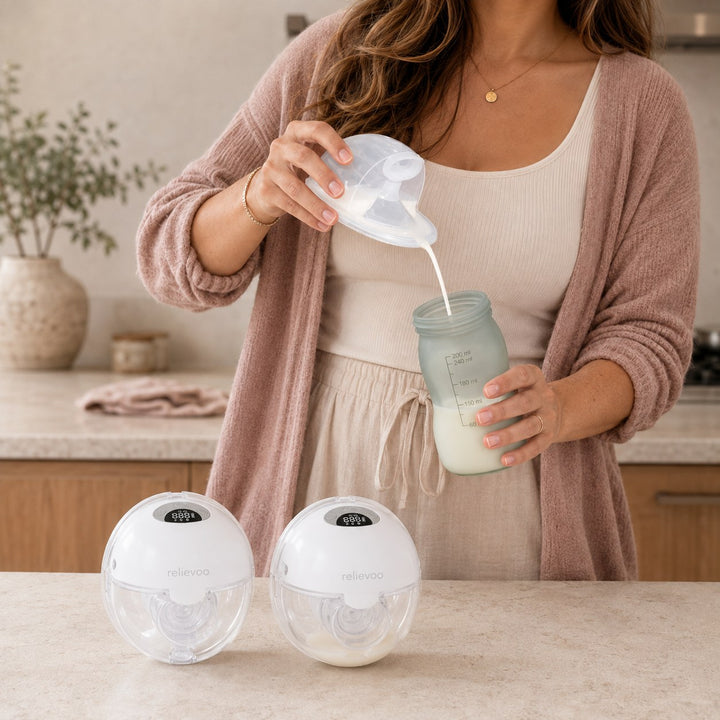
The Relievoo M22 PRO2 is a hands-free, in-bra double pump designed around comfort. It sits discreetly inside your nursing bra with no tubes, no wires to the wall and no app to download. Each palm-sized clear cup has an LED display showing your mode, level and battery, so everything you need is on the device itself.
It offers four modes: Stimulation for a light, quick rhythm at the start of a session; Suction for a deeper, slower rhythm that mimics your baby's natural suckling; Massage to help relieve engorgement, lumps and everyday discomfort; and Automatic, which flows between stimulation and suction for you. Across those modes there are up to twelve gentle levels, so you can shape every session to feel right.
The motor is ultra-quiet, making it suitable for expressing beside a sleeping baby at night or on a work call. Every part that touches your milk is BPA-free, food-grade PP and soft medical silicone, and the clear collector cup lets you see your milk as it flows. Charging is simple via a round USB base.
If you are comparing options, you can browse all the breast pumps in the Relievoo collection to see what else is available.

Verdict: who should choose which pump
There is no single "best" pump for every mum. The right choice depends on your lifestyle, how often you plan to express, and what feels comfortable for your body. Here is a clear summary to help you decide.
- Choose a wearable in-bra pump like the Relievoo M22 PRO2 if: you want hands-free flexibility, plan to express while caring for children or working, value discretion and quiet operation, and want a pump that is gentle and comfort-led.
- Choose another wearable pump (such as Elvie, Willow or Momcozy) if: you want the same hands-free freedom but prefer a different brand's design, app integration or specific features. Compare the modes, noise and materials to find what suits you.
- Choose a traditional electric pump (such as Medela or Philips Avent) if: you are happy to sit still while expressing, prefer the familiar setup with bottles and tubing, or have been recommended one by your maternity hospital or public health nurse.
- Choose a manual pump (such as Lansinoh or Tommee Tippee) if: you only need to express occasionally, want something lightweight for travel, or would like a quiet backup option. They are simple but require more effort for frequent use.
Irish-specific things worth knowing
Wherever you are in Ireland, support is close by. The HSE provides free access to lactation support through maternity hospitals and public health nursing. Cuidiú, La Leche League of Ireland and Friends of Breastfeeding all run local groups and offer guidance for mums at every stage.
Your breastfeeding breaks at work are protected by Irish law, which gives breastfeeding employees paid breaks for up to two years after the birth. A wearable pump makes using that time far easier, and our guide on pumping at work in Ireland explains your rights and practical tips.
For cleaning and sterilising advice, follow the current guidance from the HSE on breastfeeding and see our step-by-step cleaning guide. If you have any concerns about expressing, your public health nurse, midwife or GP is always your best first call.
A calm conclusion
Choosing a breast pump is a personal decision, and there is no right or wrong answer. The best pump is the one that fits your daily life, feels comfortable on your body, and helps you express without stress. Take your time, compare the options, and remember that you can always change your approach as your needs evolve.
If you would like to see the Relievoo M22 PRO2 for yourself, you can explore the product page or browse the full breast pump collection. For any questions about the pump or your order, Relievoo customer service is happy to help.
This article is for general information for Irish families and is not medical advice. For personalised feeding support, your public health nurse, GP or a HSE lactation consultant is always your best first call.
Frequently asked questions
Is a wearable pump as effective as a traditional pump?
For most mums, a modern wearable pump expresses comfortably and effectively for daily use. Traditional electric pumps with tubing are also effective but keep you sitting in one spot. If you are exclusively pumping or have supply concerns, chat to your public health nurse, midwife or GP about the right approach for you.
Can you breast pump laying down?
It is generally safer and more comfortable to pump sitting upright, as this helps milk flow naturally and avoids spills. A wearable pump worn in a well-fitting bra can allow you to lean back, but lying flat is not recommended. Follow the guidance from the HSE on safe positioning and comfortable pumping.
Should breast pumping hurt?
No, pumping should not hurt. Some gentle tugging is normal, but sharp pain usually means the flange size is wrong or the suction is too high. Check your flange fit and lower the suction level. If discomfort continues, speak to your public health nurse, midwife or GP for personalised advice.
How long should a breast pump session last?
A typical pumping session lasts around 15 to 20 minutes per breast, but this varies from mum to mum. The right length depends on your milk flow and comfort. Follow the current advice from the HSE on breastfeeding and expressing, and let your body guide you rather than watching the clock.
Is a breast pump safe to use?
Yes, breast pumps are safe when used as directed. Choose a pump made from BPA-free, food-grade materials, clean it properly after each use, and follow the manufacturer's instructions. For guidance on sterilising and storage times, refer to the HSE's breastfeeding pages and the cleaning guide on this site.