Momcozy vs Medela Hands Free Pump: What Canadian Moms Should Know
Short answer When comparing Momcozy vs Medela hands free pumps, the right choice depends on your priorities. Momcozy makes wearable in-bra pumps, while Medela offers both traditional electric pumps with tubing and some hands-free options. A wearable pump like the Relievoo M22 PRO2 sits discreetly in your bra with no tubes or wall cord. Consider comfort, noise, and how often you plan to pump when deciding which style suits your daily life.
Choosing between Momcozy and Medela hands free pumps is a common question for Canadian moms who want to express milk without being tied to a wall outlet. Both brands are well known, but they approach hands-free pumping differently. This guide compares the main types of pumps, looks at what each brand offers in general terms, and helps you decide which style might suit your daily routine. We will also take a calm look at how a wearable pump like the Relievoo M22 PRO2 fits into the picture.

Understanding the main types of breast pumps
Before comparing specific brands, it helps to understand the three main types of breast pumps available to Canadian moms. Each type has a different design and a different feel during use.
Wearable in-bra pumps
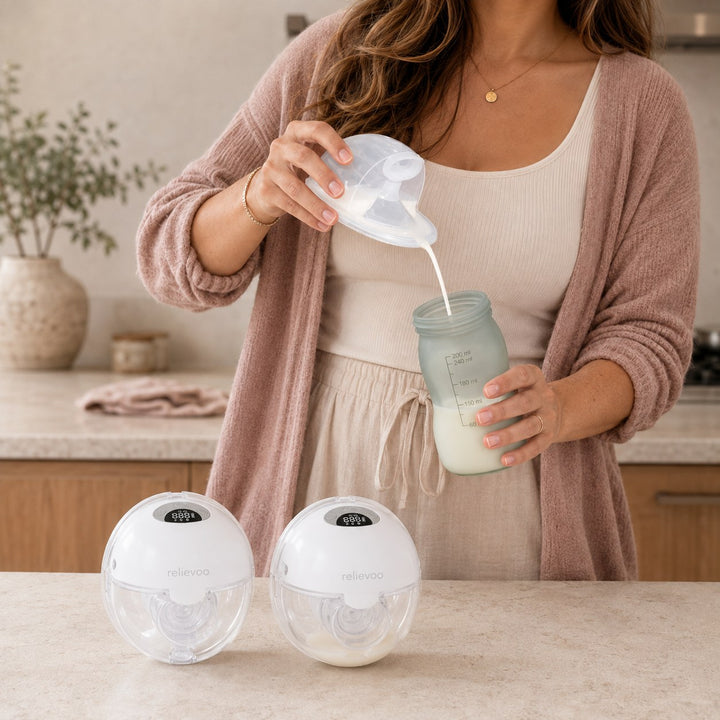
Wearable pumps sit inside your nursing bra, with the collection cup and motor all in one unit. There are no tubes and no cords, and nothing hangs outside your clothing. These pumps are designed for discretion and mobility. You can move around the house, help older children, or even sit comfortably on the sofa while pumping. The Relievoo M22 PRO2 is an example of this type: a hands-free, in-bra double pump with no tubes, no wires to the wall, and no app to download.
Traditional electric pumps with tubing
Traditional electric pumps have a separate motor unit that sits on a table or counter, connected to the breast shields by tubing. These pumps are often used for frequent, dedicated pumping sessions, such as when a mom is exclusively pumping or returning to work. Medela is a brand well known for this type of pump. They are reliable and widely used, but they do keep you tethered to the motor unit during a session.
Manual pumps
Manual pumps are operated by hand, with no motor at all. They are lightweight, quiet, and inexpensive, but they require effort and can be tiring for frequent use. Many moms keep a manual pump as a backup or for occasional use, such as relieving engorgement or expressing a small amount of milk. Brands like Philips Avent and Lansinoh make manual pumps.
| Feature | Details |
|---|---|
| Type | Wearable, in-bra, hands-free double electric breast pump (set of two cups) |
| Modes | 4 modes: Stimulation, Suction, Massage, Automatic |
| Levels | Up to 12 adjustable levels with intelligent suction and frequency adjustment |
| Controls | On-device LED display and touch buttons; no app or Bluetooth needed |
| Materials | BPA-free, food-grade PP and soft medical silicone in the milk path |
Momcozy vs Medela hands free pump: what each brand offers
Momcozy and Medela are both respected names in the breastfeeding world, but they focus on different styles of pumps.
Momcozy: wearable and discreet
Momcozy is known for making wearable in-bra pumps. Their pumps are designed to be worn inside the bra, with no tubes or cords, so you can pump hands-free and discreetly. This makes them popular with moms who want to pump while doing other things, or who prefer not to be connected to a separate motor unit.
Medela: traditional and hands-free options
Medela is one of the most established names in breast pumps. They are best known for their traditional electric pumps with tubing, which have been used by generations of moms. Medela also offers some hands-free and wearable options, but their range is broader and includes both traditional and newer styles. If you are looking for a pump that feels familiar and has a long history of use, Medela is a name you will see often.
When comparing Momcozy vs Medela hands free pumps, the key difference is the approach. Momcozy focuses almost entirely on wearable designs, while Medela offers a wider range that includes traditional pumps alongside hands-free models. Neither is inherently better. The right choice depends on whether you want the all-in-one discretion of a wearable pump or the familiar setup of a traditional electric pump.
How to compare hands free pumps for yourself
Instead of relying on rankings or claims, it helps to compare pumps based on your own priorities. Here are the factors that matter most to Canadian moms when choosing a hands free pump.
Comfort and fit
A pump only works well if it feels comfortable. The flange, or the part that fits over your breast, needs to fit properly. Every body is different, and what feels comfortable for one mom may not work for another. Look for pumps that offer soft, flexible materials in the parts that touch your skin. The Relievoo M22 PRO2 uses BPA-free, food-grade PP and soft medical silicone in the milk path, which is designed with comfort in mind.
Modes and levels
Different pumps offer different levels of control. Some have a simple on-off switch, while others let you adjust the suction strength and rhythm. More control can help you find a setting that feels right for your body. The Relievoo M22 PRO2 offers four modes: Stimulation to encourage let-down, Suction for expressing milk, Massage to ease discomfort, and Automatic, which moves between stimulation and suction on its own. It has up to 12 adjustable levels.
Noise level
If you plan to pump at work, on a video call, or beside your baby at night, noise matters. A loud pump can be disruptive and can even wake a sleeping baby. Wearable pumps are generally quieter than traditional electric pumps, but noise levels vary between models. The Relievoo M22 PRO2 is described as having a low-noise motor, soft enough to wear on a work call or beside a cot at 2am.
Ease of cleaning
Breast pumps need to be cleaned after every use, so the easier a pump is to take apart and wash, the better. Fewer parts usually means less hassle. Wearable pumps tend to have fewer separate pieces than traditional pumps with tubing, which can make cleaning simpler. For guidance on cleaning your pump when you are away from home, read our article on how to clean a breast pump on the go.
Portability
If you pump at work, while travelling, or on the go, portability is important. Wearable pumps fit entirely inside your bra, so there is nothing to carry separately. Traditional pumps require you to bring the motor unit and tubing with you. A wearable pump like the Relievoo M22 PRO2 is palm-sized and sits discreetly in your nursing bra, which makes it easy to take anywhere.
Side-by-side comparison of pump types
This table compares the main types of pumps across the factors that matter most to Canadian moms. The Relievoo column is based on the specific features of the M22 PRO2, while the other columns describe the general characteristics of each pump type.
| Criterion | Wearable in-bra pump (e.g., Relievoo M22 PRO2) | Traditional electric pump (e.g., Medela) | Wearable pump (e.g., Momcozy) |
|---|---|---|---|
| Design | All-in-one unit worn inside the bra | Separate motor unit connected by tubing | All-in-one unit worn inside the bra |
| Hands-free | Yes, completely hands-free | No, you are connected to the motor unit | Yes, completely hands-free |
| Discretion | Hidden inside your bra, no visible parts | Motor unit and tubing are visible | Hidden inside your bra, no visible parts |
| Modes and levels | 4 modes, up to 12 levels | Varies by model, often multiple settings | Varies by model, often multiple settings |
| Noise | Ultra-quiet motor | Audible motor hum | Generally quiet, varies by model |
| Cleaning | Fewer parts, simple to clean | More parts, including tubing | Fewer parts, simple to clean |
| Portability | Palm-sized, fits in your bra | Requires carrying the motor unit | Palm-sized, fits in your bra |

Is a hands free pump worth it?
Many Canadian moms wonder whether a hands free pump is worth the investment. The answer depends on your lifestyle and how you plan to use the pump.
The benefits of hands-free pumping
A hands-free pump lets you use your hands while expressing milk. You can answer emails, read to an older child, or simply sit comfortably without being tied to a wall outlet. For moms who pump multiple times a day, this freedom can make a real difference. Wearable pumps are also discreet, so you can pump without drawing attention, whether you are at work or visiting family.
The trade-offs to consider
Hands-free pumps are not for everyone. Some moms find that a traditional pump with tubing feels more familiar or provides a different sensation. Others prefer the simplicity of a manual pump for occasional use. It is also worth noting that wearable pumps hold less milk than some traditional pump bottles, so you may need to empty the collection cups more often if you have a strong milk supply.
For a closer look at how wearable pumps compare to traditional ones, read our guide on double breast pump vs single and our article on double electric breast pumps in Canada.
How a breast pump works and why you might need one
Understanding how a breast pump works can help you choose the right one. A breast pump uses gentle suction to draw milk from the breast into a collection container. Electric pumps create a rhythmic suction pattern that mimics a baby's suckling. Many pumps offer different modes, such as a light, quick rhythm to encourage let-down, and a deeper, slower rhythm for expressing milk.
There are many reasons a mom might need a breast pump. You may be returning to work and want to continue providing breast milk. You may want to share feeding duties with your partner. Or you may need to relieve engorgement or express milk if your baby is having trouble latching. For general guidance on breastfeeding and infant nutrition, the Public Health Agency of Canada and Caring for Kids from the Canadian Paediatric Society are helpful resources. La Leche League Canada also offers support for breastfeeding moms.
If you are pumping, it is important to store your milk safely. Our guide on storing breast milk in Canada covers the basics, and you can also follow the current advice from Health Canada on infant feeding.
Verdict: who should choose which pump
There is no single best hands free pump for every mom. The right choice depends on your priorities, your routine, and what feels comfortable for your body. Here is a calm summary of who each option suits best.
- Choose a wearable in-bra pump like the Relievoo M22 PRO2 if: you want complete freedom of movement, discretion, and a pump that fits entirely inside your bra. It is a good fit if you pump at work, while caring for older children, or at night and want a quiet motor that will not disturb a sleeping baby. It is also a good choice if you prefer simple controls with no app or phone pairing.
- Choose a traditional electric pump with tubing if: you prefer a familiar setup with a separate motor unit, or if you plan to do most of your pumping in one place, such as at home or at a dedicated pumping station at work. Traditional pumps are well established and widely used.
- Choose a wearable pump from a brand like Momcozy if: you want the discretion of an in-bra pump and prefer that brand's specific design. Momcozy focuses on wearable pumps, so their range is built around this style.
- Choose a manual pump if: you only need to express milk occasionally, want a lightweight backup option, or prefer a pump that requires no electricity at all.
If you are still comparing options, you can take a look at the Relievoo M22 PRO2 wearable breast pump to see its specific features, or browse all of our breast pumps to find the style that fits your needs. If you have questions about which pump might suit your situation, Relievoo customer service is happy to help.
Frequently asked questions
Which is better, Momcozy or Medela?
Neither is universally better. Momcozy focuses on wearable in-bra pumps, while Medela is known for traditional electric pumps with tubing as well as some hands-free models. The best choice depends on whether you want discretion and mobility or a more traditional setup with a separate pump unit.
Is Momcozy or Medela better for hands-free pumping?
Both brands offer hands-free options, but they approach it differently. Momcozy makes wearable in-bra pumps, while Medela has hands-free models that may still use tubing or a separate motor. A wearable pump like the Relievoo M22 PRO2 sits entirely inside your bra with no tubes at all.
Are hands-free breast pumps worth it?
For many moms, yes. Hands-free pumps let you move around, use your hands, and pump discreetly, which can make expressing milk easier to fit into a busy day. They are not for everyone, though. Some moms prefer a traditional pump with tubing for a different feel or for frequent, dedicated pumping sessions.
How does a breast pump work?
A breast pump uses gentle suction to draw milk from the breast into a collection container. Electric pumps create a rhythmic suction pattern that mimics a baby's suckling. Many pumps offer different modes, such as stimulation to encourage let-down and suction for expressing milk.
Should breast pumping hurt?
No, pumping should not hurt. If you feel pain or discomfort, it may be a sign that the flange does not fit well, the suction is too high, or the pump is not positioned correctly. It is a good idea to talk to a lactation consultant, your family doctor, or a public health nurse for guidance.