Medela Breast Pump Recycling: A Practical Guide for Canadian Moms
Short answer Recycling a Medela breast pump in Canada is possible through local electronic waste programs and some manufacturer take-back options. Before recycling, remove batteries and check with your municipality. If you are buying a new pump, consider a wearable model like the Relievoo M22 PRO2, which offers comfort, quiet operation, and a lifetime warranty.
Recycling a breast pump is something many Canadian moms think about only when the pump has served its purpose. Whether you are upgrading, passing one along, or simply clearing out the nursery, knowing how to dispose of a Medela breast pump responsibly is useful. This guide covers what to do with an old pump, what to consider before buying a new one, and how Relievoo's wearable options fit into the picture.

Understanding breast pump recycling in Canada
Breast pumps are electronic devices, which means they do not belong in your regular household recycling bin. They contain motors, circuit boards, and often rechargeable batteries. These parts need to be handled through electronic waste recycling programs. Many Canadian municipalities offer drop-off locations for small electronics, and some provinces have dedicated e-waste collection systems. A quick search of your local municipal website will usually tell you where to take small appliances and electronics.
Before you recycle a Medela pump, remove any batteries and check whether the pump has a separate collection program. Some manufacturers have take-back initiatives, but these change over time. If you are unsure, contact the brand's customer service or ask at the store where you bought the pump. For general guidance on reducing waste and recycling electronics, Health Canada and other federal resources offer practical information on safe disposal.
It is also worth remembering that not every pump needs to be recycled right away. If your pump is still in good working order, consider whether a friend or family member could use it. Some communities have programs that accept gently used baby gear. If the pump is worn out or damaged, recycling is the responsible choice.
Can you recycle breast pumps?
Yes, breast pumps can be recycled, but the process depends on the type of pump and where you live. Electric pumps with motors and batteries are treated as electronic waste. Manual pumps, which are simpler, may be recyclable through plastic recycling if they are clean and made of recyclable materials. Always check with your local recycling program first, because rules vary from one municipality to another.
| Feature | Details |
|---|---|
| Type | Wearable, in-bra, hands-free double electric breast pump (sold as a set of two cups) |
| Modes | 4 — Stimulation, Suction, Massage, Automatic |
| Levels | Up to 12 adjustable levels with intelligent suction & frequency adjustment |
| Controls | On-device LED display + touch buttons, no app, no Bluetooth |
| Materials | BPA-free, food-grade PP and soft medical silicone in the milk path |
What to consider before buying a breast pump
If you are in the market for a new pump, thinking about the end of its life is only one part of the decision. The more important question is whether the pump fits your daily life. Comfort, how it is worn, noise, cleaning, fit, and portability all matter. A pump that is awkward to use will likely end up in a drawer, and eventually in the recycling bin, sooner than one that feels easy.
Here is what to look at when comparing options:
- Comfort: Look for soft silicone parts and a pump that sits gently against your breast. A massage mode can help with engorgement and tenderness.
- How it is worn: Wearable pumps fit inside your bra and let you move around. Traditional pumps have tubes and bottles that hang outside your clothing.
- Noise: A quiet motor matters if you plan to pump at work, during a call, or beside a sleeping baby.
- Cleaning: Fewer parts and simple assembly make cleaning easier. Check whether the milk path is made of food-grade, BPA-free materials.
- Fit: Flange size affects both comfort and how well the pump works. Some pumps include multiple insert sizes.
- Portability: A lightweight, rechargeable pump is easier to take with you. Consider battery life and how the pump charges.
- Support: Look for a warranty and a return policy that give you time to decide if the pump works for you.
For more detailed guidance on cleaning and storing your pump, the step-by-step guide to cleaning a breast pump on the go and the guide to storing breast milk are helpful resources.
Comparing Medela and Relievoo
Medela is a well-known brand that makes a range of breast pumps, from manual models to electric ones. Their products are widely available and have a long history in the market. Many Canadian hospitals use Medela pumps, which speaks to their reputation. However, Medela pumps are often traditional in design, with tubes, flanges, and bottles that hang outside your clothing. They can be bulky to carry, and some models are quite expensive.
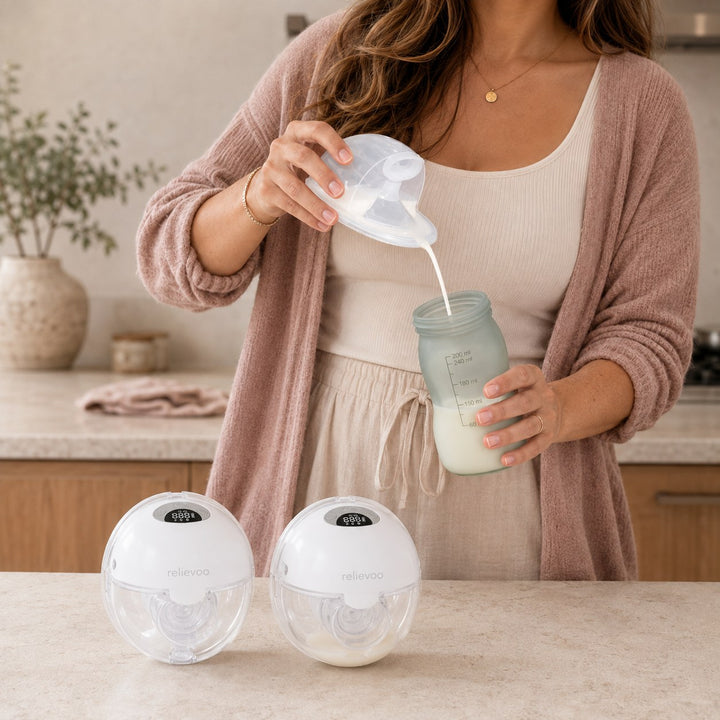
Relievoo takes a different approach. The Relievoo M22 PRO2 is a wearable, in-bra double pump. It has no tubes and no wires to the wall. Each palm-sized cup sits discreetly inside your nursing bra, and the controls are on the device itself. There is no app to download and no phone to pair. This design makes it easy to pump while doing other things, whether that is answering emails, folding laundry, or sitting with your older child.
When it comes to recycling, both brands produce electronic devices that should be disposed of through e-waste programs. The difference is in the product itself. A wearable pump like the M22 PRO2 is designed for everyday convenience, which may mean you get more use out of it before it reaches the end of its life.
How does a breast pump work?
Breast pumps work by creating gentle suction that draws milk from the breast. Most electric pumps have different modes. Stimulation mode uses a light, quick rhythm to encourage let-down. Suction mode uses a deeper, slower rhythm that mimics a baby's natural suckling. Some pumps, like the M22 PRO2, also have a massage mode for comfort and an automatic mode that moves between stimulation and suction on its own.
What to look for in a wearable pump
Wearable pumps have become popular because they offer freedom that traditional pumps do not. If you are considering one, here are the features that matter most.
The Relievoo M22 PRO2 has four modes: Stimulation, Suction, Massage, and Automatic. It offers up to twelve adjustable levels, so you can find the setting that feels right for you. The massage mode is a standout feature, because it is designed to help with engorgement, lumps, and the tender feeling that many moms experience. The pump is also very quiet, which makes it suitable for pumping during a work call or beside a sleeping baby at night.
The milk path is made of BPA-free, food-grade PP and soft medical silicone. The clear collector cup lets you see your milk as it flows, and the round USB charging base makes it simple to top up the battery. Everything lives on the device itself, so there is no app to manage and no Bluetooth to pair.
What breast pump should I buy?
The right pump depends on your routine. If you pump mostly at home and do not mind being near an outlet, a traditional electric pump may work fine. If you want to pump while moving around, at work, or during the night, a wearable pump is worth serious consideration. Think about how often you will pump, where you will do it, and how much you value discretion and quiet operation.

Comparing your options: a quick checklist
To make the decision easier, here is a table of the key criteria to compare. Use it when looking at any breast pump, whether from Medela, Relievoo, or another brand.
| Criterion | Why it matters | What to check |
|---|---|---|
| Comfort | A comfortable pump is one you will actually use | Soft silicone parts, massage mode, gentle suction levels |
| How it is worn | Affects whether you can move around while pumping | In-bra wearable design vs. tubes and bottles outside clothing |
| Noise level | Important for pumping at work or beside a sleeping baby | Quiet motor, low decibel rating |
| Cleaning | Simple cleaning saves time and keeps milk safe | Few parts, BPA-free food-grade materials, easy assembly |
| Fit | The right flange size improves comfort and expression | Multiple insert sizes, adjustable levels |
| Portability | Easier to take with you on busy days | Lightweight, rechargeable battery, simple charging |
| Support | Gives you confidence in your purchase | Warranty, return policy, customer service |
For more on the differences between pump styles, the guide to double vs. single pumps and the guide to double electric pumps offer useful comparisons.
Why recycling matters and how to do it right
Recycling electronics helps keep materials like metals and plastics out of landfills. It also recovers valuable resources that can be used to make new products. For a breast pump, the process is straightforward once you know where to take it.
Start by checking your municipal recycling program. Many cities have drop-off depots for small electronics. Some provinces have extended producer responsibility programs that accept e-waste at designated locations. If your pump has a rechargeable battery, remove it if you can, and check whether the battery needs special handling. For pumps that are still in good condition, donating or passing them along is a form of reuse that is even better than recycling.
For general information on infant feeding and pump use, the Public Health Agency of Canada, Caring for Kids, and La Leche League Canada are reliable sources of guidance.
Why is a breast pump needed?
A breast pump is useful for many reasons. It allows you to express milk for times when you are away from your baby, such as returning to work or running errands. It can also help relieve engorgement and maintain your milk supply. For families who need to bottle feed, a pump makes it possible to offer breast milk in a bottle.
Should breast pumping hurt?
Pumping should not hurt. If you feel pain, the suction level may be too high, or the flange may not fit properly. Start at a low level and increase gradually until you find a comfortable setting. If discomfort continues, consider speaking with a lactation consultant or your health care provider for personalised advice.
Who the Relievoo M22 PRO2 suits best
The Relievoo M22 PRO2 is a good fit for moms who want a hands-free, discreet pumping experience. It suits those who pump regularly and want to move around while doing it, whether at work, at home, or during the night. The quiet motor and massage mode make it especially appealing for moms who value comfort and calm. It is also a solid choice for anyone who prefers a simple device without apps or Bluetooth pairing.
If you are comparing pumps, take the time to think about your routine and what matters most to you. A wearable pump like the M22 PRO2 offers convenience and comfort, while a traditional pump may be familiar and widely available. Both have a place, and the right choice depends on your needs.
For moms who are ready to make a change, the Relievoo M22 PRO2 is available now. You can also browse the full Relievoo breast pump collection to find the model that fits your life. Every Relievoo pump comes with free tracked delivery across Canada, a 30-day money-back return policy, and a lifetime warranty.
Recycling your old pump is a small step that makes a difference. And when you are ready for a new one, choosing a pump that fits your daily routine means you are more likely to use it, and less likely to need another replacement anytime soon.
Frequently asked questions
Can you recycle breast pumps?
Yes, breast pumps can be recycled, but not always through regular curbside recycling. Because they contain electronic parts and batteries, they are often treated as electronic waste. Check with your local municipal recycling program or a nearby electronic waste drop-off location to find the right option in your area.
How does a breast pump work?
A breast pump uses suction to gently draw milk from the breast, mimicking a baby's natural suckling rhythm. Most electric pumps offer different modes, such as stimulation to encourage let-down and suction for expression. Wearable pumps like the Relievoo M22 PRO2 sit inside your bra and operate hands-free.
What breast pump should I buy?
Think about how often you will pump, where you will use it, and what matters most to you, such as comfort, noise level, or portability. A wearable double pump is a good fit for moms who want hands-free convenience. Compare features like modes, levels, and how easy the pump is to clean.
Why is a breast pump needed?
A breast pump can help moms express milk for times when they are away from their baby, return to work, or need to relieve engorgement. It can also help maintain milk supply. Many families find a pump useful for building a small stash of breast milk for bottle feeding.
Should breast pumping hurt?
Pumping should not hurt. If you feel pain, it may be a sign that the flange does not fit well or that the suction level is too high. Start at a low level and increase gradually. If discomfort continues, consider talking to a lactation consultant or your health care provider for guidance.