Pumping Help Online Canada: A Gentle Guide for Moms
Short answer Pumping help online in Canada means finding reliable, practical guidance on choosing a pump, getting a comfortable fit, building a routine, and storing milk safely. This guide covers what matters most, from flange sizing and suction levels to cleaning and building a stash, with honest advice for comparing options.
Finding reliable pumping help online in Canada can feel overwhelming, especially when every search returns a different opinion. Between choosing a pump, getting the right fit, building a routine, and storing milk safely, there is a lot to consider. This guide pulls together the practical information that matters most, so you can make confident choices for you and your baby.

What to look for in a breast pump
Before comparing models, it helps to know what actually makes a pump comfortable and practical for daily use. The right pump for you depends on how often you plan to express, where you will be pumping, and what feels good on your body.
Here are the main things to consider:
- Comfort. A pump should feel gentle, not painful. Look for soft silicone flanges and adjustable suction levels so you can find a rhythm that works for you.
- How it is worn. Wearable pumps sit inside your bra, which means no tubes and no being tethered to a wall. This can make pumping much easier to fit into a busy day.
- Noise. If you plan to pump at work, in a shared space, or beside your sleeping baby, a quiet motor makes a big difference.
- Cleaning. Fewer parts usually means faster cleaning. Check that the pieces that touch your milk are easy to rinse and sterilize.
- Fit. Flange size matters more than most people realize. A flange that is too small or too large can reduce comfort and output. Many pumps offer insert options to help you find the right size.
- Portability. If you will be pumping at work or while travelling, a lightweight, cordless design is worth considering.
- Support. A clear warranty and responsive customer service give you peace of mind if something goes wrong.
| Feature | Details |
|---|---|
| Type | Wearable, in-bra, hands-free double electric breast pump (sold as a set of two cups) |
| Modes | 4 — Stimulation, Suction, Massage, Automatic |
| Levels | Up to 12 adjustable levels with intelligent suction & frequency adjustment |
| Controls | On-device LED display + touch buttons, no app, no Bluetooth |
| Materials | BPA-free, food-grade PP and soft medical silicone in the milk path |
Understanding how a breast pump works
Most electric breast pumps work by creating gentle suction that mimics a baby's natural sucking pattern. They typically start with a stimulation phase, which uses a light, quick rhythm to encourage your let-down, and then switch to a suction phase with a deeper, slower rhythm for expression.
Some pumps add extra modes for specific situations. For example, a massage mode can help ease engorgement or tenderness, while an automatic mode moves between stimulation and suction on its own. Having a few options lets you shape each session to how you are feeling that day.
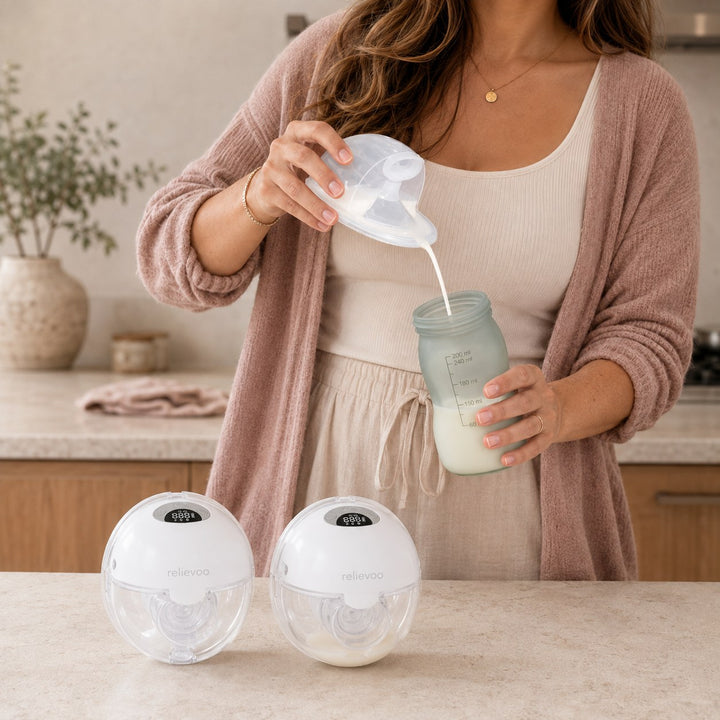
If you are comparing pumps, the Relievoo M22 PRO2 wearable breast pump offers four modes across up to twelve levels, with a dedicated massage mode for comfort. It is a hands-free, in-bra design with no app and no Bluetooth, so everything is controlled directly on the device.
Why pumping can hurt and how to fix it
Pumping should not hurt. If you feel sharp pain, pinching, or soreness, something is likely off. The most common causes are a flange that does not fit well, suction that is too high, or a poor seal between the pump and your breast.
Here is what to check:
- Flange size. Your nipple should move freely inside the tunnel without rubbing the sides. Many pumps offer different flange sizes or inserts to help you find the right fit.
- Suction level. Start low and increase gradually. The highest setting is not always the most effective, and it can cause discomfort.
- Positioning. Make sure the pump is centred and sitting evenly against your breast. A slight adjustment can make a big difference.
- Skin care. A little nipple cream or a warm compress before pumping can help if you are feeling tender.
If discomfort continues, it is worth talking to your family doctor, midwife, a public health nurse, or a lactation consultant. They can help you figure out what is causing the pain and how to make pumping more comfortable.
How long should a pumping session be?
There is no single right answer, because every body is different. A typical session lasts until your milk flow slows and your breasts feel comfortably softer, which is often around 15 to 20 minutes per side. Some moms need a little longer, and some are done sooner.
Rather than watching the clock, pay attention to your body. When the flow slows to a trickle and your breasts feel less full, that is usually a good sign you can finish. Pumping for much longer than needed does not necessarily mean more milk, and it can leave you sore.
For current guidance on pumping frequency and session length, La Leche League Canada offers practical, evidence-informed support for nursing parents.
Building a pumping routine that works
Consistency tends to help more than intensity. A short session at a regular time each day is often easier to sustain than a long session that disrupts your whole schedule. Many moms find that pumping in the morning, when supply is often higher, is a gentle way to build a stash.
If you are returning to work, it can help to start a few weeks ahead. This gives you time to get comfortable with your pump, figure out your flange size, and build a small freezer stash without pressure. You do not need a huge supply, just enough to cover your first days back while you settle into a new rhythm.
For more detailed advice on preparing for work, our guide on pumping breaks in Canada walks through the practical steps step by step.

Cleaning and storing your milk safely
Keeping your pump clean is important for your baby's health. After each use, rinse the parts that touched your milk and wash them with warm, soapy water. Follow the current cleaning advice from Health Canada, and let everything air dry on a clean towel.
For storage, freshly expressed milk can be kept in the fridge for a few days and in a home freezer for several months. Always label containers with the date and use the oldest milk first. Our guide on storing breast milk in Canada covers the details, including how to thaw and warm milk gently.
If you are pumping away from home, a few simple habits make it easier. A clean, dry container for expressed milk, a small cooler bag, and a quick rinse for your pump parts can keep things simple. For more tips, see our guide on cleaning a breast pump on the go.
Comparing your options: a quick checklist
When you are comparing pumps, it helps to have a clear idea of what matters to you. Here is a simple table to guide your decision:
| Criterion | Why it matters | What to check |
|---|---|---|
| Comfort | Painful pumping is hard to sustain | Soft silicone flanges, adjustable suction, massage mode |
| How it is worn | Affects how easily pumping fits into your day | In-bra wearable design vs. traditional pump with tubes |
| Noise | Important for work, shared spaces, and night pumping | Look for a low-noise motor |
| Cleaning | Fewer parts means faster cleaning | Check how many pieces touch your milk |
| Fit | The right flange size improves comfort and output | Available flange sizes or inserts |
| Portability | Useful for work and travel | Cordless design, battery life, carrying case |
| Support | Peace of mind if something goes wrong | Warranty and customer service |
If you are leaning toward a wearable pump, the Relievoo M22 PRO2 is a hands-free, in-bra double pump with four modes, twelve levels, and a quiet motor. It is designed to be worn discreetly, with no tubes and no app to manage. You can also browse the full Relievoo breast pump collection to compare different styles.
Who each option suits
A traditional pump with tubes is often a good fit for moms who pump mostly at home and do not mind being seated near an outlet. They tend to have fewer moving parts and can be simple to clean.
A wearable, hands-free pump suits moms who want to move around while expressing, whether that means making breakfast, helping an older child, or working at a desk. It is also a good choice for pumping at work or while travelling, because there are no cords and everything fits inside your bra.
If you are still deciding, think about where you will pump most often and how much freedom you need. There is no wrong answer, only the option that fits your life best. For a closer look at the differences, our guide on double versus single breast pumps may help.
A calm approach to pumping
Pumping is a skill, and like any skill, it gets easier with practice. Give yourself permission to take it slowly, adjust as you go, and ask for help when you need it. Whether you pump occasionally or every day, the goal is a routine that feels sustainable for you.
For more reading, the Public Health Agency of Canada and the Canadian Paediatric Society offer reliable information on breastfeeding and infant nutrition. And if you have questions about a specific product, Relievoo customer service is happy to help.
This article shares general information for Canadian families and is not medical advice. For personalized feeding support, talk to your family doctor, midwife, a public health nurse, or a lactation consultant.
Frequently asked questions
Is pumping supposed to hurt?
Pumping should not hurt. Some gentle tugging is normal, but sharp pain or pinching usually means the flange size is off or the suction is too high. Trying a different flange size and lowering the level often helps. If discomfort continues, a lactation consultant can offer tailored advice.
How long should a pumping session be?
A typical session lasts until your milk flow slows and your breasts feel comfortably softer, which is often around 15 to 20 minutes per side. There is no single right length, and it can change from day to day. Follow your body's cues and the current advice from a trusted source like La Leche League Canada.
Do you pump after breastfeeding?
Some moms pump a little after nursing to build a stash or relieve fullness, while others find it unnecessary. It depends on your goals and how your body responds. A short session in the morning, when supply is often higher, can be a gentle way to add a few ounces without disrupting feeds.
Which pumping session should I drop first?
The session you drop first depends on your routine and your comfort. Many moms find the middle-of-the-night session easiest to let go of once the baby sleeps longer, while others prefer to keep it. The key is to drop one gradually so your body can adjust without becoming uncomfortably full.
Why does pumping hurt sometimes?
Pain during pumping is often caused by a flange that is too small or too large, suction that is too strong, or a poor seal. Checking your flange fit and starting at a lower level can make a big difference. If pain persists, it is worth talking to your family doctor, midwife, or a lactation consultant.