Returning to Work Breastfeeding: A Step-by-Step Guide
Short answer Returning to work while breastfeeding is manageable with a simple plan. Start by introducing a bottle a few weeks ahead, build a small milk stash, and set a realistic pumping schedule that matches your baby's feeding times. Talk to your employer about a private space and breaks, and keep your pump kit organised. Most importantly, be flexible and kind to yourself as you both adjust to the new rhythm.
Returning to work while breastfeeding is a big transition, and it is completely normal to feel a mix of emotions about it. This guide is for Canadian moms who want to keep breastfeeding after maternity leave, whether you are heading back to a desk, a hospital shift, a retail floor, or a home office. With a little planning and a flexible mindset, you can find a rhythm that works for you and your baby.

Plan your return to work breastfeeding routine before your first day
The weeks before you go back are the best time to set yourself up for success. You do not need a perfect plan, but having a rough idea of how your day will look can reduce a lot of stress. Start by thinking about how often your baby feeds during the day, because that will guide how often you need to pump at work.
If you have not introduced a bottle yet, it helps to start a few weeks ahead. Offer a small amount of expressed milk once a day, and let someone else give it so your baby learns to take milk from another person. Some babies adapt quickly, while others need more time, so be patient.
You might also want to build a small stash of milk for the first few days back. You do not need a freezer full, just enough to cover the first day or two while you settle into your new pumping routine. For detailed guidance on safe storage, read our article on storing breast milk in Canada.
Talk to your employer about pumping at work
Under the Canada Labour Code, many employees are entitled to breaks and a private space for pumping. The rules can vary depending on whether you work in a federally regulated workplace or under provincial employment standards, so it is worth checking what applies to you. Have a conversation with your manager or human resources before your return to arrange a clean, private room and a schedule that works for both of you.
For more information about breastfeeding and infant nutrition, the Public Health Agency of Canada offers practical guidance. You can also find supportive resources through La Leche League Canada.
| Feature | Details |
|---|---|
| Type | Wearable, in-bra, hands-free double electric breast pump (sold as a set of two cups) |
| Modes | 4 — Stimulation, Suction, Massage, Automatic |
| Levels | Up to 12 adjustable levels with intelligent suction & frequency adjustment |
| Controls | On-device LED display + touch buttons (mode, +, −, power), no app, no Bluetooth |
| Materials | BPA-free, food-grade PP and soft medical silicone in the milk path |
| Battery display | LED display on each cup shows mode, level and battery |
Choose a pump that fits your workday
Your pump is the tool you will use most, so it is worth choosing one that fits your lifestyle. There are two main types: traditional pumps with tubes and flanges that plug into the wall, and wearable pumps that sit inside your bra. Both work well, but they suit different situations.
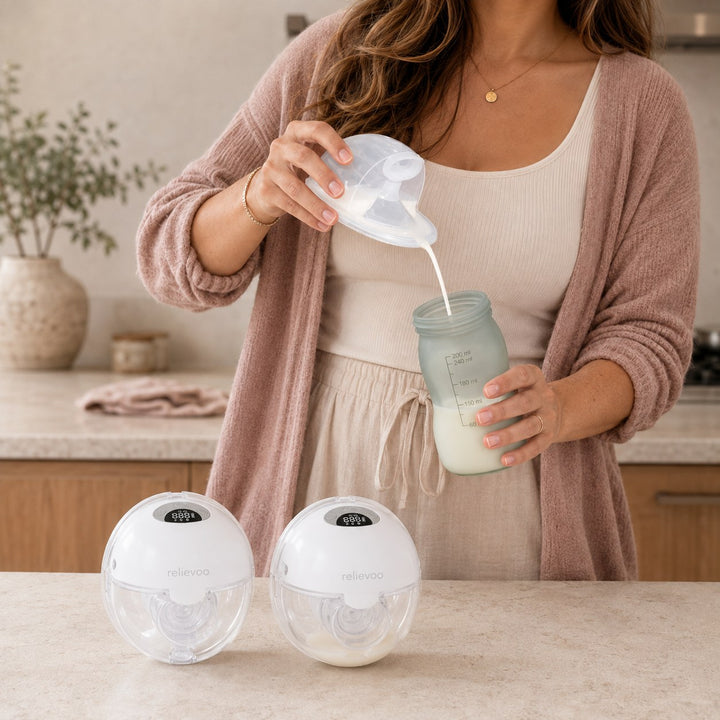
If you have a private office or a dedicated pumping room and do not mind being seated for a pumping session, a traditional pump might be all you need. If your day involves moving around, or if you want to pump while answering emails or walking to a meeting, a wearable pump can be a helpful option. The Relievoo M22 PRO2 is a hands-free, in-bra double pump with four modes and twelve gentle levels, designed to be quiet and discreet. It is one option among many, and the right choice depends on your comfort and your daily routine.
If you are still deciding, our guide to breast pumps can help you compare what is available. You might also find it useful to read about double versus single pumps to understand the trade-offs.
What to look for in a work pump
Think about these features when choosing a pump for work:
- Hands-free operation, so you can pump while doing other tasks
- Quiet motor, so you feel comfortable using it in a shared space
- Easy to clean, since you will likely need to wash parts during the day
- Portable and lightweight, especially if you commute
- Adjustable suction levels, so you can find a comfortable setting
For tips on keeping your pump clean while you are out, see our step-by-step guide on cleaning a breast pump on the go.
Set a pumping schedule that mirrors your baby's feeds
The simplest way to protect your milk supply is to pump as often as your baby would normally breastfeed. If your baby feeds every few hours, try to pump around the same times during your workday. This keeps your body producing milk and prevents engorgement and discomfort.
Many moms find it helpful to pump first thing in the morning, once mid-morning, and once in the afternoon. You can adjust based on your baby's age and your own comfort. Some women produce more milk in the morning, so it can help to pump a little extra then if you want to build a stash.
Remember that your supply naturally adjusts over time. In the first week back, you might notice a change in how much you express. This is normal while your body adapts to the new rhythm. Be patient and give yourself a few weeks to settle in.
How to handle a busy workday
Some days will be busier than others, and that is okay. If you cannot pump at your usual time, try to fit in a shorter session when you can. Even a brief pumping session is better than skipping it entirely. Keep a backup plan, such as a manual pump or an extra set of parts, in your bag for unexpected delays.
If you are using a wearable pump like the M22 PRO2, you can pump while continuing to work at your desk. Just make sure you are in a safe position and not operating a vehicle. Pumping should always happen in a comfortable, stationary setting.
Store your milk safely at work
Proper storage is essential to keep your expressed milk safe for your baby. You will need a cooler bag with ice packs if you do not have access to a fridge, or a clean container in the workplace refrigerator. Label each container with the date you expressed the milk.
For current guidance on how long breast milk can be stored and at what temperature, follow the advice from Health Canada. You can also read our detailed article on breast milk storage guidelines for a practical overview.
What to bring to work each day
A small checklist can make your morning easier. Pack the night before so you are not rushing:
- Your pump and all its parts
- Extra bottles or storage bags
- A cooler bag with ice packs
- A small towel or cloth for spills
- Breast pads, just in case
- A bottle of water and a snack
Common mistakes to avoid when returning to work breastfeeding
It is easy to put pressure on yourself during this transition, but a few common pitfalls are worth avoiding:
- Skipping pumping sessions to catch up on work. This can lead to discomfort and may affect your supply over time.
- Waiting too long to pump. Your body signals when it is time, and delaying can make sessions less comfortable.
- Comparing your output to other moms. Every body is different, and what you express at work does not reflect the full picture of your breastfeeding relationship.
- Forgetting to clean your pump parts. Hygiene matters, especially when you are pumping away from home.
- Being too rigid with your schedule. Some flexibility will make the transition much smoother for you and your baby.

Ease the emotional transition for you and your baby
Returning to work is not just a logistical change, it is an emotional one too. You might feel guilty, relieved, sad, or a mix of all three. These feelings are all normal. Your baby will adjust to the new routine, and so will you.
To make the transition gentler, try to keep breastfeeding moments special when you are together. Morning snuggles, evening feeds, and weekend nursing sessions can become meaningful parts of your day. Some moms find that nursing right before leaving for work and immediately after coming home helps both of them reconnect.
If you run into challenges, you do not have to figure it out alone. A lactation consultant, your family doctor, or a public health nurse can offer personalized support. The Caring for Kids website from the Canadian Paediatric Society also has helpful information for parents.
A simple summary of your return to work breastfeeding plan
| Step | What to do | When |
|---|---|---|
| Introduce a bottle | Offer expressed milk once a day | A few weeks before returning |
| Build a small stash | Freeze a few portions of milk | A week or two before returning |
| Talk to your employer | Arrange a private space and breaks | Before your first day |
| Choose your pump | Pick one that fits your workday | Before returning |
| Set a pumping schedule | Mirror your baby's feeding times | First week back |
| Pack your supplies | Pump, bottles, cooler bag, snacks | Every evening |
| Store milk safely | Label and refrigerate or cool | Each pumping session |
Finding your new rhythm
Returning to work while breastfeeding is a journey, not a test. Some days will feel easy, and others will feel hard. What matters most is that you find a routine that feels sustainable for your family. A wearable pump like the Relievoo M22 PRO2 can make pumping at work more convenient, but it is just one piece of the puzzle. Give yourself time, be flexible, and trust that you and your baby will find your way together.
Frequently asked questions
How do I return to work when breastfeeding?
Start by introducing a bottle a few weeks before your return so your baby gets used to it. Build a small stash of expressed milk, then set a pumping schedule at work that mirrors your baby's usual feeding times. Talk to your employer about a private space and reasonable breaks. Take it slowly and adjust as you learn what works for you.
How do I continue breastfeeding when going back to work?
The key is to keep expressing at work as often as your baby would normally feed. This protects your supply and keeps you comfortable. Many moms find a wearable pump helpful because it fits inside the bra and lets them pump while continuing other tasks. Store the milk properly and bring it home at the end of the day.
How do I breastfeed when going back to work?
You can keep breastfeeding directly in the mornings, evenings, and on days off, while giving expressed milk during the workday. Some moms also combine breastfeeding with pumping at work to maintain their supply. The routine looks different for every family, so find a rhythm that feels sustainable for you.
How does a breast pump work?
A breast pump uses gentle suction to remove milk from the breast, mimicking a baby's sucking rhythm. Most pumps have a stimulation mode to encourage let-down and a suction mode for expression. Wearable pumps like the Relievoo M22 PRO2 sit inside your bra, are hands-free, and let you move around while pumping.
What breast pump should I buy for work?
Think about where you will pump and how much portability you need. A wearable, hands-free pump is convenient for a busy workday because it fits in your bra and has no tubes or wires. Consider the number of modes, comfort, noise level, and how easy it is to clean. Choose one that fits your body and your daily routine.