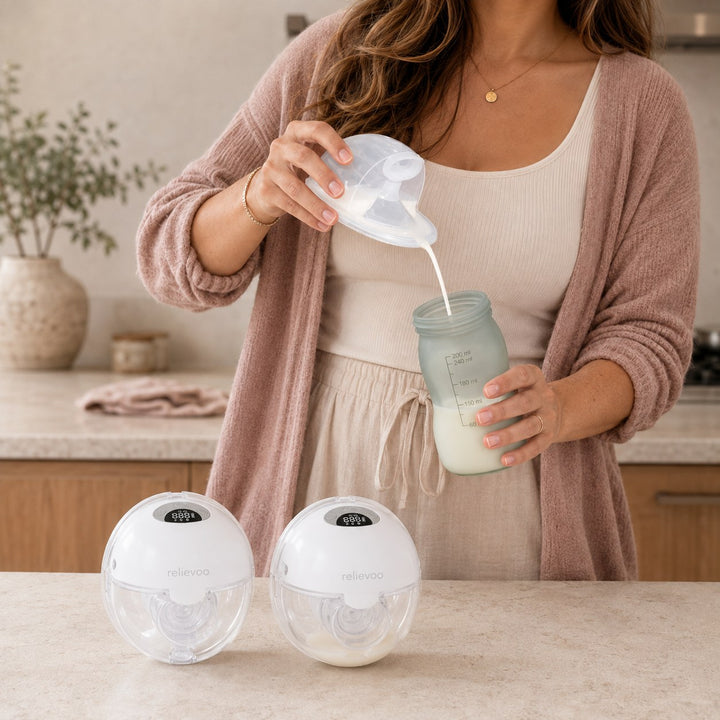
Best Wearable Breast Pump Pair: A Real Comparison
Short answer The best wearable breast pump pair depends on your daily routine. Wearable in-bra pumps offer hands-free convenience and discretion, while traditional electric pumps with tubing provide a familiar setup and manual pumps offer portability and quiet operation. Compare comfort, noise, capacity, and ease of cleaning to decide which suits your lifestyle.
Searching for the best wearable breast pump pair can feel overwhelming with so many options on the market. This comparison is for moms who want to understand the real differences between wearable in-bra pumps, traditional electric pumps with tubing, and manual pumps. We will walk through how each type works, who it suits best, and what to consider before you buy, so you can make a confident choice for your daily routine.

Understanding the main types of breast pumps
Before comparing specific features, it helps to understand the three main categories of breast pumps available today. Each type has a different design, and that design affects how you use it, how it feels, and where you can pump.
Wearable in-bra breast pumps
Wearable breast pumps are designed to fit entirely inside your nursing bra. The motor, collection cup, and controls are all contained in one compact unit that sits discreetly against your chest. There are no tubes, no cords, and no external bottles dangling from your clothing. This design allows you to move around freely while pumping, whether you are folding laundry, working at a desk, or caring for an older child. Brands like Momcozy, Elvie, and Willow make wearable pumps, and Relievoo offers its own wearable double pump as well.
Traditional electric pumps with tubing
Traditional electric breast pumps have been the standard for decades. These pumps feature a motor unit that sits on a table or counter, connected to breast shields by plastic tubing. You remain seated near the motor while pumping, which can feel restrictive. However, many moms find these pumps reliable and familiar. Medela and Lansinoh are well-known brands in this category. Some moms prefer traditional pumps for their established track record, even if they require more setup and less mobility.
Manual breast pumps
Manual breast pumps are operated by hand, with no motor at all. You create suction by squeezing a handle or lever. These pumps are lightweight, quiet, and inexpensive, but they require one hand to operate continuously. Manual pumps can be useful for occasional pumping, relieving engorgement, or as a backup option. Philips Avent and Tommee Tippee make manual pumps that many moms keep in their diaper bags for emergencies.
| Feature | Details |
|---|---|
| Type | Wearable, in-bra, hands-free double electric breast pump (sold as a set of two cups) |
| Modes | 4 — Stimulation, Suction, Massage, Automatic |
| Levels | Up to 12 adjustable levels with intelligent suction & frequency adjustment |
| Controls | On-device LED display + touch buttons (mode, +, −, power), no app, no Bluetooth |
| Materials | BPA-free, food-grade PP and soft medical silicone in the milk path |
| Charging | USB-rechargeable with a simple round charging base |
Comparing the best wearable breast pump pair options
When looking for the best wearable breast pump pair, the key is to compare how each type performs across the criteria that matter most to you. The table below outlines the main differences between wearable in-bra pumps, traditional electric pumps, and manual pumps. The Relievoo column reflects the features of the Relievoo M22 PRO2, a wearable double pump designed for hands-free comfort.
| Criterion | Relievoo M22 PRO2 (wearable) | Other wearable in-bra pumps | Traditional electric pumps | Manual pumps |
|---|---|---|---|---|
| Hands-free use | Yes, fits entirely in your bra | Yes, designed for in-bra wear | No, you stay near the motor unit | No, one hand operates the handle |
| Modes and levels | 4 modes, up to 12 levels | Varies by model, typically multiple modes | Usually several modes and levels | Suction controlled by hand pressure |
| Noise level | Ultra-quiet motor | Quiet, but varies by brand | Audible motor hum | Very quiet, no motor |
| Portability | Compact, no cords or tubes | Compact and discreet | Requires a flat surface and outlet | Small and lightweight |
| Cleaning | Few parts, clear collector cups | Few parts, easy to rinse | Multiple parts including tubing | Simple, few parts |
| Best for | Moms who want comfort and mobility | Moms who pump while moving | Moms who prefer a traditional setup | Occasional or emergency pumping |
How wearable breast pumps work
Wearable breast pumps work by placing a collection cup directly over your breast inside your bra. The motor creates gentle suction that mimics a baby's nursing rhythm. Most wearable pumps offer multiple modes, such as stimulation to encourage let-down and suction for fuller expression. The Relievoo M22 PRO2 adds a massage mode for comfort and an automatic mode that flows between stimulation and suction on its own.
What to look for in a wearable pump pair
When comparing wearable pump pairs, consider the fit inside your bra, the number of modes and levels, and how quiet the motor is. A pump that fits well and feels comfortable is more likely to become part of your daily routine. Look for clear collection cups so you can see your milk flow, and check that the controls are easy to reach and read. Some pumps require an app or phone connection, while others, like the Relievoo M22 PRO2, keep all controls on the device itself.
When to use a wearable breast pump pair
A wearable breast pump pair is especially useful when you need to pump while doing other things. Many moms use wearable pumps during work hours, while traveling, or when caring for a toddler. The hands-free design means you can type, talk, or move around without being tethered to a wall. Some moms also use wearable pumps for night sessions, when a quiet motor matters most. The Relievoo M22 PRO2 is described as ultra-quiet, making it suitable for pumping beside a sleeping baby.
Can you sleep with a wearable breast pump?
Sleeping with a breast pump in place is not recommended. Pumping while lying down can cause spills and may not be safe. If you need to express milk at night, it is best to sit up, pump, and then store the milk properly before returning to rest. For guidance on safe milk storage and handling, the CDC offers current recommendations.
Is a wearable breast pump worth it?
For many moms, a wearable breast pump pair is worth the investment because it offers freedom and discretion that traditional pumps cannot match. The ability to pump hands-free during daily activities can make pumping feel less like a disruption. However, every mom's situation is different. If you pump only occasionally and do not mind sitting still, a traditional or manual pump may serve you well. If you pump frequently and value mobility, a wearable pair is likely worth considering.
How long do wearable breast pumps last?
The lifespan of a wearable breast pump depends on how often you use it and how well you maintain it. Regular cleaning and proper storage help preserve performance over time. If you notice reduced suction or unusual noise, it may be time to replace parts or the pump itself. Following the manufacturer's care instructions and the guidance of organizations like the American Academy of Pediatrics can help you keep your pump in good condition.

Comparing comfort and convenience
Comfort is a personal factor that varies from mom to mom. A pump that feels comfortable to one person may not work for another. The Relievoo M22 PRO2 is designed with comfort as a priority, featuring a massage mode to ease engorgement and tenderness. Its materials include food-grade PP and soft medical silicone in the milk path, all BPA-free. The clear collector cups let you see your milk flow, and the round USB charging base makes topping up simple.
Cleaning and maintenance
All breast pumps require regular cleaning to keep milk safe for your baby. Wearable pumps generally have fewer parts than traditional pumps, which can make cleaning faster. Traditional pumps with tubing require extra attention to ensure all parts are dry and free of milk residue. For detailed cleaning and storage guidance, the Office on Women's Health provides reliable information.
Verdict: which option suits you best
Choosing the best wearable breast pump pair comes down to your lifestyle, your pumping frequency, and your comfort preferences. Here is a clear breakdown of who each option suits best.
- Choose a wearable in-bra pump pair if... you pump frequently, need to move around during sessions, and value discretion. The Relievoo M22 PRO2 is a strong option for moms who want comfort, quiet operation, and simple one-touch controls. It is also a good choice if you prefer not to use an app or pair a phone.
- Choose a traditional electric pump if... you prefer a familiar setup, do not mind sitting still while pumping, and want a pump with a long track record. Traditional pumps from brands like Medela and Lansinoh are widely used and trusted.
- Choose a manual pump if... you pump occasionally, want a lightweight backup option, or need something quiet and simple. Manual pumps from Philips Avent and Tommee Tippee are easy to pack and require no electricity.
For moms who decide a wearable pair is right for them, Relievoo offers a range of breast pumps designed for hands-free comfort. The M22 PRO2 is one option that combines gentle modes, quiet operation, and on-device controls in a discreet in-bra design.
Final thoughts on finding your best wearable breast pump pair
Finding the best wearable breast pump pair is about matching the pump to your daily life. Consider how often you pump, where you pump, and what comfort means to you. Wearable pumps offer unmatched freedom, traditional pumps offer familiarity, and manual pumps offer simplicity. Take your time, compare the options, and choose the pump that feels right for you and your baby. If you have questions about a specific product, Relievoo customer service is available to help.
Frequently asked questions
How do wearable breast pumps work?
Wearable breast pumps fit inside your nursing bra, with the motor and collection cup built into one compact unit. They use gentle suction to express milk while you move around freely. Most models offer several modes and adjustable levels so you can find a comfortable rhythm.
What wearable breast pump is the best?
The best wearable breast pump pair is the one that fits well, feels comfortable, and matches your routine. Look for adjustable suction, quiet operation, and easy-to-clean parts. A pump that is discreet and simple to use will likely become your everyday companion.
Can you sleep with a wearable breast pump?
Sleeping with a breast pump in place is not recommended. Pumping while lying down can lead to spills and may not be safe. If you need to express at night, sit up, pump, and store the milk properly before going back to rest.
Is a wearable breast pump worth it?
For many moms, a wearable breast pump pair is worth it because it allows hands-free pumping during daily activities. The lack of tubes and cords makes pumping feel less disruptive. Whether it is worth it depends on how often you pump and how much you value mobility.
How long do wearable breast pumps last?
The lifespan of a wearable breast pump depends on usage frequency and care. Regular cleaning and proper storage help maintain performance. If suction weakens or noise increases, it may be time to replace parts or the pump itself.