Storing Breast Milk Guidelines Australia: A Step-by-Step Guide
Short answer Storing breast milk safely in Australia comes down to clean hands, clean containers and prompt chilling. Use food-grade containers, label every bag or bottle with the date, and follow the current storage guidance from trusted sources like the Australian Breastfeeding Association for fridge, freezer and room temperature times.
If you are expressing milk for your baby, knowing the right way to store it can save you time, reduce waste and give you confidence that every drop is safe. This guide covers the storing breast milk guidelines Australia in a practical, step-by-step way, whether you are a new mum building a stash for back to work or an experienced parent looking for a refresher.

We will walk through the whole process, from preparing your containers to thawing frozen milk, and we will point you to trusted Australian health organisations for the most current advice. Along the way, we will look at common mistakes and how to avoid them, so you can feel calm and organised.
Why safe storage matters
Expressed breast milk is a living fluid. It contains antibodies, enzymes and beneficial bacteria that help protect your baby. How you handle and store it affects how well those properties are preserved. Clean hands, clean equipment and prompt chilling are the three fundamentals that keep your milk at its best.
Getting the basics right also means less waste. When you know how to store milk properly, you can freeze it with confidence, thaw only what you need and avoid tipping precious drops down the sink. For general information on breastfeeding and expressing, the Australian Breastfeeding Association and Raising Children Network are excellent places to start.
| Feature | Details |
|---|---|
| Capacity | 180ml / 6oz per bag |
| Material | 100% food-grade silicone, BPA, PVC & phthalate-free |
| Seal | Leak-proof double-seal zipper |
| Safe for | Freezer, fridge & microwave safe |
| Cleaning | Dishwasher safe, top rack |
| Reusable | Replaces 1,000+ disposable bags |
Step-by-step: how to store expressed breast milk
These steps follow the general principles recommended by Australian health authorities. For specific storage times, always refer to the current advice from the Australian Breastfeeding Association or Pregnancy, Birth and Baby, as recommendations can be updated.
Step 1: wash your hands and prepare your equipment
Start with clean hands. Wash them thoroughly with soap and water before you begin expressing or handling milk. Make sure your pump parts, bottles and storage containers have been washed and sterilised according to the manufacturer's instructions and the current advice from your health authority.
Step 2: choose the right storage container
You have two main options: hard-sided containers (like BPA-free bottles) or storage bags. Both work well. Hard containers are reusable and easy to pour from. Bags take up less freezer space and are convenient for building a stash.
If you prefer bags, the Relievoo Reusable Silicone Breast Milk Storage Bags are a practical choice. They are made from food-grade silicone, are leak-proof and freezer-safe, and each bag holds 180ml. Because they are reusable, they replace hundreds of single-use plastic bags, which is kinder to your budget and the environment.
Step 3: label every container with the date
Before you pour a single drop, write the date on the container or bag. If you are expressing at work or in different locations, you might also want to note the time. This simple habit prevents confusion later and helps you use the oldest milk first.
Step 4: cool milk promptly
Freshly expressed milk can be left at room temperature for a short period, but the safest approach is to chill it promptly. Pop it in the fridge as soon as you finish expressing. If you are combining milk from different pumping sessions, cool the new milk in the fridge first before adding it to already chilled milk.
Step 5: store in the right place
In the fridge, store milk towards the back, where the temperature is most consistent, rather than in the door. In the freezer, place bags flat to freeze. Once frozen, they stack neatly and thaw more quickly. Leave a little space at the top of each bag or bottle because milk expands as it freezes.
Step 6: thaw safely
The gentlest way to thaw frozen milk is to move it to the fridge the night before you need it. If you need it sooner, hold the bag or bottle under warm running water. Never use a microwave or boiling water, as these can create hot spots that destroy nutrients and risk burning your baby's mouth.
Step 7: use within the recommended time
Once thawed, breast milk should be used within a short window and never refrozen. Follow the current storage time guidelines from the Australian Breastfeeding Association or healthdirect for room temperature, fridge and freezer storage, and for thawed milk.
Common mistakes to avoid
Even experienced mums can slip up. Here are the most common storage mistakes and how to avoid them.
Adding warm milk to frozen milk
Never add warm, freshly expressed milk directly to a container of frozen milk. This can raise the temperature of the frozen milk and encourage bacterial growth. Cool the new milk in the fridge first.
Using the microwave to thaw or warm milk
Microwaves heat unevenly. Even if the bottle feels cool to the touch, there can be hot pockets that burn your baby's mouth. They also destroy some of the beneficial properties of breast milk. Always thaw in the fridge or under warm running water.
Refreezing thawed milk
Once breast milk has been thawed, it should not be refrozen. The texture and quality change, and the risk of bacterial growth increases. Only thaw what you think you will need.
Storing milk in the fridge door
The temperature in the fridge door fluctuates every time you open it. Store breast milk towards the back of the fridge, where the temperature is stable and coldest.
Overfilling bags or bottles
Milk expands when frozen. Overfilled containers can burst or leak. Leave at least a couple of centimetres of space at the top of each bag or bottle.
Choosing the right storage products
Not all storage containers are created equal. Look for containers that are BPA-free and food-grade. If you choose bags, make sure they have a secure, leak-proof seal. Reusable silicone bags are a great option because they are durable, easy to clean and can be used for years.
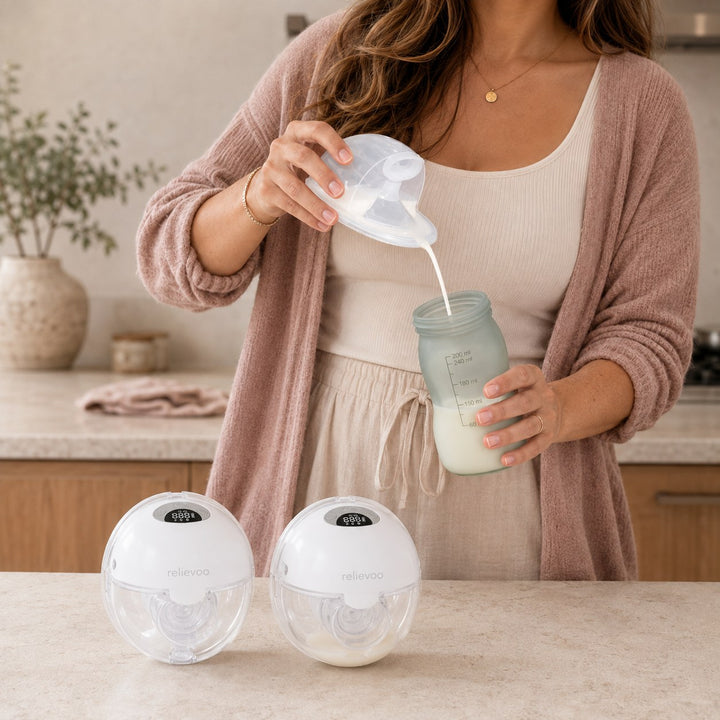
For mums who pump regularly, having a good system makes a big difference. A reliable pump, like the Relievoo M22 PRO2 wearable breast pump, lets you express comfortably and discreetly, which makes it easier to build a healthy stash. You can see the full range of Relievoo breast pumps to find one that suits your routine. Pairing a good pump with proper storage habits means you will always have milk ready when you need it.

Quick reference: storage checklist
Here is a simple summary of the key steps to keep your milk safe and organised.
| Step | What to do | Why it matters |
|---|---|---|
| 1. Clean hands | Wash thoroughly before expressing or handling milk | Prevents contamination |
| 2. Clean containers | Use sterilised, food-grade bottles or bags | Keeps milk safe for baby |
| 3. Label | Write the date on every container | Use oldest milk first |
| 4. Chill promptly | Put milk in the fridge soon after expressing | Slows bacterial growth |
| 5. Store correctly | Back of the fridge; flat in the freezer | Maintains consistent temperature |
| 6. Thaw gently | Fridge overnight or warm running water | Preserves nutrients, avoids hot spots |
| 7. Use in time | Follow current guidelines for fridge, freezer and thawed milk | Ensures milk is fresh and safe |
How a breast pump fits into the picture
Storing milk well is only half the story. The other half is expressing it comfortably and efficiently. A good pump can make the difference between a quick, easy session and a frustrating one. Many mums find that a hands-free wearable pump, like the Relievoo M22 PRO2, fits neatly into a busy day. You can express while you look after older children, answer emails or simply sit back and relax.
If you are just starting out, you might find our guide on the best breast pump in Australia helpful for comparing your options. And if you are heading back to work, our article on pumping at work in Australia covers the practical side of expressing away from home.
Conclusion
Storing breast milk safely does not have to be complicated. With clean hands, the right containers and a simple labelling habit, you can build a stash that gives you flexibility and peace of mind. Follow the current guidelines from trusted Australian health organisations, and always trust your instincts. If you have any concerns about your milk or your baby, your midwife, child and family health nurse or GP are there to help.
Frequently asked questions
How long can breast milk be stored in the fridge?
Current advice from trusted health sources in Australia is that freshly expressed breast milk can be kept in the fridge for a limited number of days. Because recommendations can change, it is best to check the latest guidance from the Australian Breastfeeding Association or your child and family health nurse.
Can you freeze breast milk in silicone bags?
Yes. Food-grade silicone storage bags are designed to be freezer-safe. Leave a little room at the top because milk expands when frozen, and always lay the bag flat to freeze for easier stacking and faster thawing.
How do you thaw frozen breast milk?
The gentlest way is to move the frozen milk to the fridge the night before, or to hold the bag or bottle under warm running water. Never use boiling water or the microwave, as hot spots can destroy nutrients and burn your baby's mouth.
How long can thawed breast milk be kept?
Once fully thawed in the fridge, breast milk should be used within a short window. It should never be refrozen. For the most current advice, check the Australian Breastfeeding Association website or speak with your child and family health nurse.
What is the best container for storing breast milk?
Food-grade containers with tight-fitting lids are ideal. Reusable silicone bags are a popular choice because they are leak-proof, freezer-safe and eco-friendly. Always label each container with the date you expressed the milk.