Best Wearable Breast Pump Australia: A Practical Comparison
Short answer The best wearable breast pump in Australia depends on your daily routine, comfort needs and budget. Wearable in-bra pumps offer hands-free convenience and discretion, while traditional electric pumps with tubing provide strong suction and larger capacity. Manual pumps suit occasional use. Compare features, fit and price to find what works for you.
Finding the best wearable breast pump in Australia can feel overwhelming with so many options on the market. This guide is for mums who want to compare the main types of pumps, understand what each offers, and make a confident choice for their own routine. We will look at wearable in-bra pumps, traditional electric pumps with tubing, and manual pumps, so you can see which style suits your lifestyle best.

Why consider a wearable breast pump in Australia
Wearable breast pumps have become popular with Australian mums because they fit inside your bra and leave your hands free. There are no tubes connecting you to a wall, so you can move around the house, help with older children, or even work at a desk while expressing. For mums returning to work or managing a busy household, this kind of flexibility can make a real difference to your day.
That said, the best wearable breast pump for you is not necessarily the most popular one. It is the one that fits your body well, feels comfortable, and suits how often you plan to pump. Some mums prefer a traditional electric pump for its strong suction and large capacity, while others love the discretion of a hands-free option.
| Feature | Details |
|---|---|
| Type | Wearable, in-bra, hands-free double electric breast pump (sold as a set of two cups) |
| Modes | 4 — Stimulation, Suction, Massage, Automatic |
| Levels | Up to 12 adjustable levels with intelligent suction & frequency adjustment |
| Controls | On-device LED display + touch buttons (mode, +, −, power), no app, no Bluetooth |
| Materials | BPA-free, food-grade PP and soft medical silicone in the milk path |
The main types of breast pumps explained
Before comparing specific brands, it helps to understand the three main categories of breast pumps available in Australia. Each type has its own strengths, and the right choice depends on your circumstances.
Wearable in-bra pumps
Wearable pumps sit entirely inside your nursing bra, with the collection cup and motor built into one discreet unit. They are cordless, quiet and designed for hands-free use. Brands like Relievoo, Momcozy and Elvie make this style of pump. These pumps are ideal for mums who want to express on the go, at work, or while caring for other children.
Traditional electric pumps with tubing
Traditional electric pumps use a motor unit connected to breast shields by tubing. They are often more powerful and can be very effective for regular, full-time expressing. Brands like Medela and Spectra are well known for this type of pump. The main trade-off is that you are tethered to the motor, which can make moving around more difficult.
Manual pumps
Manual pumps are simple, hand-operated devices that work without electricity. They are lightweight, quiet and affordable, making them a good backup option for occasional use or travel. Brands like Philips Avent and Lansinoh offer manual pumps. They do require more effort, so they are not ideal for frequent, full-time expressing.
How to compare wearable breast pumps in Australia
When you are comparing the best wearable breast pump options, there are several features to look at. Comfort is the most important factor, because you will be using the pump regularly. Check that the cups fit your breast size and that the suction levels feel gentle yet effective.
Noise level matters too, especially if you plan to pump at work or beside your baby while they sleep. Battery life and charging convenience are also worth considering, as is how easy the pump is to clean and assemble. Finally, think about whether you want a double pump to express both sides at once, or a single pump for occasional top-ups.
What is the best wearable breast pump Australia for you
The answer depends on your priorities. If you value discretion and hands-free convenience above all, a wearable in-bra pump is likely your best match. If you need maximum suction and do not mind being near a power point, a traditional electric pump may serve you better. For occasional use or emergencies, a manual pump can be a handy addition to your nappy bag.
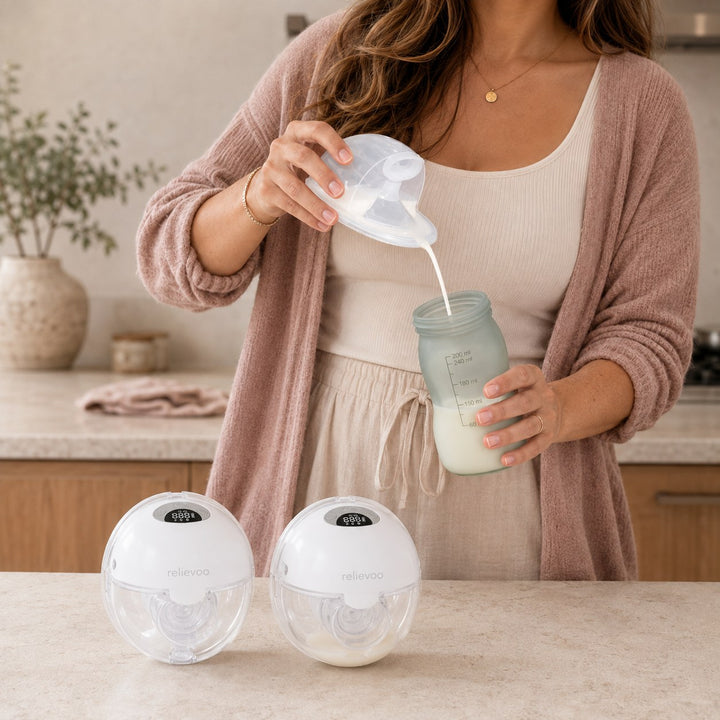
For mums who want a gentle, comfort-led wearable option, the Relievoo M22 PRO2 offers four modes including a dedicated massage setting, with up to twelve adjustable levels. It is a hands-free, in-bra double pump with no tubes or wires, and no app to set up. The clear collector cups let you see your milk as it flows, and the ultra-quiet motor is designed for calm, discreet sessions.
Comparison table: wearable vs traditional vs manual pumps
This table summarises the key differences between the three main types of breast pumps. Use it as a starting point for your own comparison.
| Criterion | Wearable in-bra pump | Traditional electric pump | Manual pump |
|---|---|---|---|
| Hands-free use | Yes, fits inside your bra | No, you are connected by tubing | No, you operate it by hand |
| Discretion | High, discreet under clothing | Low, visible motor unit | Moderate, compact but visible |
| Mobility | Full, move around freely | Limited, need to stay near the motor | Full, but one hand is occupied |
| Suction control | Adjustable levels, comfort-led | Often strong, adjustable | Controlled by your hand pressure |
| Ease of cleaning | Simple, few parts | More parts, including tubing | Simple, few parts |
| Best for | Busy mums, work, travel | Regular, full-time expressing | Occasional use, emergencies |
| Example features (Relievoo M22 PRO2) | 4 modes, 12 levels, massage mode, ultra-quiet | Varies by brand | Varies by brand |
Comfort and fit: what to look for in a wearable pump
Comfort is personal, and what works for one mum may not work for another. When choosing a wearable breast pump, pay attention to the materials that touch your skin and your milk. Look for BPA-free, food-grade materials and soft silicone that feels gentle against tender skin.
Fit is equally important. A pump that does not sit securely in your bra may leak or feel uncomfortable. Some pumps are designed with a clear collector cup so you can see your milk flow, which helps you confirm everything is working well. If you have larger breasts, you may want to read our guide on the best wearable breast pump for large breasts for more specific advice.
Why a massage mode can make a difference
Many mums experience engorgement, lumps or general tenderness while breastfeeding. A massage mode on a wearable pump can help ease that tight, full feeling before or during a session. This is a feature that not all pumps offer, so it is worth considering if comfort is a priority for you.
The Relievoo M22 PRO2 includes a dedicated massage mode alongside stimulation, suction and automatic modes. This is designed to help relieve discomfort and make the whole expressing experience feel gentler, especially during the early weeks when your body is adjusting.

Practical considerations for pumping mums
Beyond the pump itself, there are practical things to think about. How will you store your expressed milk? What is the best way to clean your pump? These details affect your daily routine, so it helps to plan ahead.
For storage guidelines, our article on storing breast milk guidelines in Australia walks through the essentials. For general breastfeeding information and support, the Australian Breastfeeding Association and Raising Children Network are trusted places to start. They offer practical, evidence-based guidance for mums at every stage.
How long should a breast pumping session be
The length of a pumping session varies from mum to mum and depends on your milk flow and comfort. Rather than watching the clock, it is often better to pump until your breasts feel comfortable and the flow has slowed significantly. Follow your body's cues and the current advice from trusted sources like Pregnancy, Birth and Baby.
Should breast pumping hurt
Pumping should not hurt. If you feel pain, it may be a sign that the flange does not fit well or that the suction is too high for your comfort. Start on a low level and gradually increase until you find a setting that feels effective but comfortable. If pain continues, talk to your midwife, child and family health nurse or GP for personalised support.
Verdict: who each pump type suits best
There is no single best wearable breast pump in Australia for everyone. The right choice depends on your lifestyle, your body and how you plan to use the pump. Here is a clear summary of who each option suits.
- Choose a wearable in-bra pump if: you want hands-free convenience, discretion and the freedom to move around while expressing. It is ideal for mums returning to work, caring for older children, or pumping on the go.
- Choose a traditional electric pump if: you are expressing full-time and want strong, reliable suction with a larger milk collection capacity. It suits mums who have a dedicated pumping spot at home or work.
- Choose a manual pump if: you only need to express occasionally, want a lightweight backup option, or are travelling and do not want to carry an electric device.
- Choose the Relievoo M22 PRO2 if: comfort is your top priority and you want a gentle, quiet, hands-free pump with a massage mode and simple one-touch controls. It is a thoughtful choice for mums who value calm, discreet sessions.
Making your final decision
Take your time to compare the options and think about what will fit your daily life. If you are still unsure, consider what matters most to you: comfort, convenience, suction strength or price. You can also browse the full range of Relievoo breast pumps to see what is available and read the product details carefully.
Remember that every mum's breastfeeding journey is different, and what works for a friend may not work for you. Trust your instincts, prioritise your comfort, and do not hesitate to reach out to a health professional if you have questions or concerns. The right pump is the one that makes expressing feel easier and more comfortable for you.
Final thoughts
Choosing a breast pump is a personal decision, and there is no wrong answer if it works for you. Whether you prefer the hands-free freedom of a wearable pump, the reliable suction of a traditional electric model, or the simplicity of a manual option, the best choice is the one that supports your comfort and your routine. Take your time, compare your options, and choose the pump that feels right for your body and your lifestyle.
Frequently asked questions
Which wearable breast pump is best?
The best wearable breast pump for you depends on your lifestyle, breast size and comfort preferences. Look for adjustable suction levels, a quiet motor and a secure in-bra fit. Consider whether you want a double or single pump, and how often you plan to express.
What is the best wearable breast pump Australia?
Australian mums often compare wearable pumps from brands like Relievoo, Momcozy and Elvie. The right choice depends on your needs: comfort-led features, noise levels, battery life and price. Read product details carefully and consider what matters most for your daily routine.
How does a breast pump work?
A breast pump uses suction to draw milk from the breast into a collection container. Electric pumps create a rhythmic suction pattern that mimics a baby's suckling, while manual pumps rely on hand pressure. Most pumps offer stimulation and expression modes to support let-down.
What breast pump should I get?
Think about how often you will pump, where you will pump and your budget. Wearable in-bra pumps suit mums who want hands-free convenience and discretion. Traditional electric pumps offer strong suction and larger bottles. Manual pumps are handy for occasional use or travel.
Should breast pumping hurt?
Pumping should not hurt. If you feel pain, check that the flange fits well and that the suction level is comfortable. Start on a low level and increase gradually. If discomfort continues, talk to your midwife, child and family health nurse or GP for support.