Momcozy vs Medela Australia: A Practical Comparison
Short answer Choosing between Momcozy and Medela in Australia comes down to pump style. Momcozy makes wearable in-bra pumps for hands-free expressing, while Medela makes traditional electric pumps with tubing and bottles. Your decision depends on whether you value discretion and mobility or a more established, plug-in pumping setup.
If you are searching for "momcozy vs medela australia", you are likely weighing up two very different approaches to expressing milk. This comparison is for Australian mums who want to understand the practical differences between wearable in-bra pumps and traditional electric pumps before making a decision. We will look at how each type works, what it feels like to use day to day, and who each option suits best.

Momcozy vs Medela: Two Different Pump Styles
The core difference between Momcozy and Medela is not just the brand, but the type of pump each company is known for. Momcozy makes wearable in-bra breast pumps that sit discreetly inside your nursing bra, with no tubes and no cords. Medela, on the other hand, is a long-established brand that makes traditional electric breast pumps with tubing that connects to collection bottles, typically powered by plugging into a wall outlet.
Understanding this fundamental difference helps you see that the choice is not simply about one brand being better than the other. It is about which style of pumping fits your daily life, your routine and your comfort. Both approaches can help you express milk, but they feel very different in practice.
| Feature | Details |
|---|---|
| Type | Wearable, in-bra, hands-free double electric breast pump (sold as a set of two cups) |
| Modes | 4 — Stimulation, Suction, Massage, Automatic |
| Levels | Up to 12 adjustable levels with intelligent suction & frequency adjustment |
| Controls | On-device LED display + touch buttons (mode, +, −, power), no app, no Bluetooth |
| Materials | BPA-free, food-grade PP and soft medical silicone in the milk path |
| Noise | Ultra-quiet motor, tuned for calm night sessions |
Wearable In-Bra Pumps: Freedom and Discretion
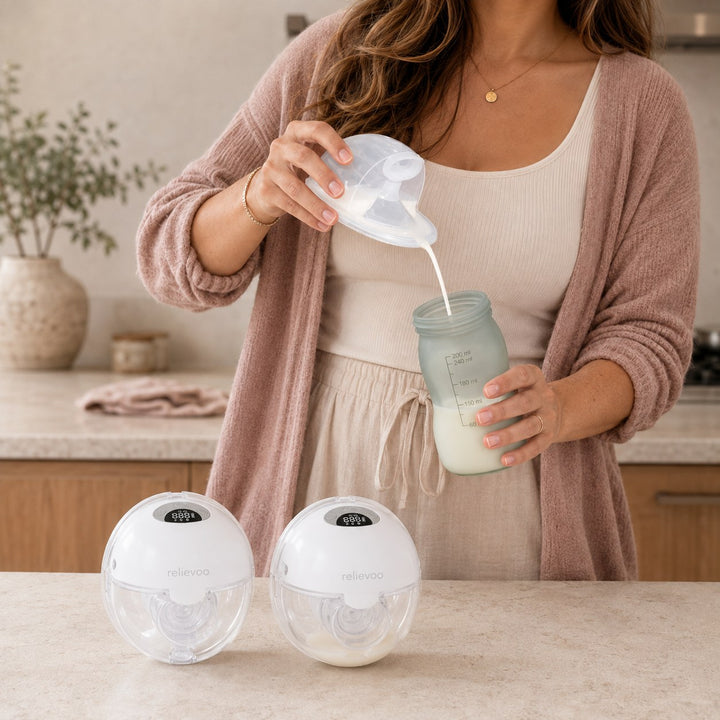
Wearable pumps like those made by Momcozy, Elvie and Willow are designed to be worn inside your bra. The pump, the collection cup and the controls all sit together in one discreet unit. There are no tubes to manage and no bottles dangling from your chest. You can move around, fold laundry, work at a desk or even lie back while expressing.
This style of pump is particularly popular with mums who need to pump while caring for older children, working from home or travelling. The hands-free design means you are not tied to a power point or a particular chair. Many mums also appreciate that a wearable pump can be used during night feeds without the noise and disruption of a traditional pump.
For those who want this level of freedom, the Relievoo M22 PRO2 is a wearable option worth considering. It is a hands-free, in-bra double pump with four modes including a dedicated massage mode, and it operates quietly enough for night-time expressing. You can see the full range of wearable options in the Relievoo breast pump collection.
How Does a Wearable Pump Work?
A wearable pump works by placing the collection cup directly over your nipple inside your bra. The motor creates suction that draws milk from the breast into the cup. Most wearable pumps offer multiple suction levels and modes to mimic a baby's natural feeding rhythm. You control the settings with buttons on the device itself, and many models show the mode and battery level on a small display.
What Are the Benefits of Hands-Free Pumping?
The main benefit is convenience. You can express while doing other things, which is a huge advantage for busy mums. There is no need to sit still attached to a machine. Wearable pumps also tend to be quieter than traditional electric pumps, which makes them more discreet in public or at work.
Traditional Electric Pumps: Established and Reliable
Traditional electric pumps, such as those made by Medela, Lansinoh and Philips Avent, have been around for decades. They typically consist of a motor unit that sits on a table, with tubing that connects to breast shields and collection bottles. Many of these pumps plug into a wall outlet, although some have battery options.
These pumps are often chosen for frequent or exclusive pumping because they have a strong, consistent suction. They are also generally easier to clean and sterilise, as the parts are simple and widely available. If you are planning to pump several times a day for a long period, a traditional pump may feel more robust and dependable.
However, the trade-off is that you are tethered to the motor unit. You need to sit in one place while pumping, which can feel restrictive. The tubing and bottles can also be cumbersome, and the noise of the motor may be more noticeable, especially at night.
Why Is a Breast Pump Needed?
A breast pump is needed for many reasons. Some mums return to work and need to express milk for their baby while they are away. Others pump to relieve engorgement, build a freezer stash or allow a partner to give a bottle. Some mums pump because their baby has difficulty latching directly. Whatever the reason, a pump can help you continue providing breast milk for your baby.
For general information about breastfeeding and expressing, the Australian Breastfeeding Association is a valuable resource. You can also find practical guidance on the Raising Children Network website.
Comparing the Two Styles Side by Side
To help you see the difference clearly, here is a comparison table that looks at the key factors you might consider when choosing between a wearable pump and a traditional electric pump.
| Factor | Wearable In-Bra Pump (e.g. Momcozy, Elvie, Relievoo M22 PRO2) | Traditional Electric Pump (e.g. Medela, Lansinoh) |
|---|---|---|
| Portability | Fully portable, worn inside your bra | Motor unit sits on a table, needs to be carried separately |
| Hands-free use | Yes, you can move around while pumping | No, you need to sit near the motor unit |
| Discretion | Discreet, hidden under clothing | Visible tubing and bottles |
| Noise | Generally quiet, suitable for night use | Motor noise can be more noticeable |
| Setup | Simple, no tubes to assemble | Requires connecting tubing and bottles |
| Suction modes | Multiple modes including stimulation, suction, massage and automatic | Typically offers adjustable suction levels |
| Best for | Mums who want flexibility and mobility | Mums who prefer a traditional, established setup |

What Breast Pump Should I Get?
There is no single answer that suits every mum. The best pump for you depends on your lifestyle, your budget and how often you plan to express. Here are some questions to ask yourself:
- Where will you mostly pump? At home, at work, or on the go?
- Do you need to move around while expressing, or are you happy to sit still?
- How important is discretion and quiet operation to you?
- Do you prefer a simple, all-in-one device or are you comfortable with tubing and separate parts?
- How often do you plan to pump each day?
If you are still unsure, talking to your midwife, child and family health nurse or the Australian Breastfeeding Association helpline can help you think through what will work best for your situation.
How Long Should a Breast Pump Session Take?
A typical expressing session lasts around 15 to 20 minutes per breast, but this can vary from mum to mum. Some women express more quickly, while others need a little longer. The important thing is to follow your body's cues and not rush. For guidance on expressing routines, the Pregnancy, Birth and Baby website has helpful information.
Verdict: Who Each Option Suits
After comparing the two styles, here is a clear summary of who each type of pump suits best.
- Choose a wearable in-bra pump if you want to move around while expressing, need discretion at work or in public, or want a quiet option for night-time pumping. This style suits mums who value convenience and hands-free freedom.
- Choose a traditional electric pump if you prefer a well-established design, plan to pump frequently and want a simple, reliable setup with easily available replacement parts. This style suits mums who are happy to sit still during a session.
- Consider a manual pump if you only need to express occasionally, such as for relief or a short trip away. Manual pumps are simple and portable, but they require more effort from your hand.
For mums leaning towards the wearable style, the Relievoo M22 PRO2 offers a comfortable, quiet and discreet option with four modes and up to twelve levels of suction. It is designed to be worn inside your bra with no tubes and no app, making it a straightforward choice for hands-free expressing.
Final Thoughts on Momcozy vs Medela in Australia
Choosing between Momcozy and Medela in Australia is really about choosing between two different pumping experiences. Wearable pumps give you freedom and discretion, while traditional pumps offer a familiar and dependable setup. Both can help you provide breast milk for your baby, so the right choice is the one that fits comfortably into your daily routine.
Take your time, consider how you will actually use the pump, and do not hesitate to reach out to a lactation professional if you have questions. The most important thing is that you find a pump that makes expressing feel manageable and supportive, whatever your circumstances.
Frequently asked questions
Is Momcozy Australian?
No, Momcozy is not an Australian company. It is an international brand that sells wearable breast pumps and ships to Australia. When comparing brands, it can help to focus on the pump style and features rather than where the company is based.
How does a breast pump work?
A breast pump uses suction to draw milk from the breast into a collection bottle or cup. Most electric pumps offer different suction levels and rhythms to mimic a baby's natural suckling pattern. You can read more about how expressing works on the Australian Breastfeeding Association website.
Which breast pump should I get?
Think about when and where you will pump. If you want to move around, work or care for older children while expressing, a wearable in-bra pump may suit you. If you prefer a more traditional setup with tubing and bottles, a plug-in electric pump could be a better fit.
How long should a breast pump session take?
A typical expressing session lasts around 15 to 20 minutes per breast, but this can vary. The right length depends on your milk flow and your baby's needs. For personalised guidance, talk to your midwife, child and family health nurse or the Australian Breastfeeding Association helpline.
Can you breast pump colostrum?
Yes, you can express colostrum, especially in the early days after birth. Many mums hand express colostrum before their milk comes in. If you have questions about expressing colostrum, your midwife or the Australian Breastfeeding Association can offer practical advice.